

Our Blog Details

  • Post By
  • Date
    January 29, 2026
  • Comments
    0
Companionship directly affects how long and how well your elderly parent lives. Seniors with regular social connections have lower rates of depression, slower cognitive decline, stronger immunity, and longer lifespans than those who are isolated. This isn’t about keeping them entertained. It’s about a fundamental human need that becomes more critical, not less, as people age. When children move to other cities, when a spouse passes away, when mobility declines, and the world shrinks to four walls, loneliness becomes a silent health crisis. One that damages the brain and body as much as smoking 15 cigarettes a day. At Pranyaas, we’ve worked with families across India who initially called us for physical care, help with bathing, medication, and mobility. Within weeks, they reported the biggest change wasn’t physical. It was their parent talking more, eating better, and showing interest in life again. The caregiver’s presence gave them someone to share their day with. This guide explains why companionship matters for senior mental health, what loneliness actually does to aging bodies and minds, and practical ways to address it.

Why Loneliness is a Medical Problem, Not Just an Emotional One

For decades, loneliness in elderly parents was treated as sad but inevitable. Now we know it’s a health risk factor as dangerous as obesity, physical inactivity, or smoking. When humans are isolated, the body responds as if under threat. Stress hormones remain elevated. Inflammation increases. Sleep deteriorates. The immune system weakens. Over time, this accelerates every aspect of aging. If your parent is showing concerning changes beyond loneliness, confusion, falls, neglecting hygiene, these may be connected. Review the 10 Warning Signs Your Elderly Parent Needs a Professional Caregiver to assess whether professional support is needed.

How Loneliness Damages Mental Health in Seniors

Depression and Anxiety

The most immediate effect of isolation is declining mood. Without regular interaction, seniors lose the small moments that make days meaningful, such as morning tea with someone, sharing news, and having their opinions heard. Signs of depression in elderly parents often look different than in younger people:
  • Loss of appetite rather than emotional crying
  • Physical complaints (headaches, body pain) without a clear cause
  • Irritability and anger, rather than sadness
  • Withdrawal from activities they previously enjoyed
  • Sleeping too much or too little
Many families mistake these for “just getting old.” They’re not. They’re treatable symptoms of loneliness-driven depression.

Cognitive Decline and Dementia

The brain needs stimulation to maintain function. Conversation requires memory recall, language processing, emotional interpretation, and real-time response. Without regular mental exercise, cognitive abilities decline faster. Lonely seniors who develop dementia often decline more rapidly than those with social support. The brain loses its reason to stay sharp. For families managing early-stage memory issues, environmental factors matter significantly. See How to Create a Safe Home Environment for Seniors with Dementia for practical modifications that support cognitive health.

Loss of Identity and Purpose

Before retirement, people have roles: professional, parent of young children, and community member. After retirement, especially after children leave and spouse passes, many seniors struggle with the question: “What am I for now?” Companionship provides answers. Someone who listens to their stories validates that their experiences matter. Someone who asks their advice confirms their wisdom is valued. Someone who simply shows up regularly proves they’re worth showing up for.

Common Situations Where Companionship is Missing

Children Moved to Other Cities or Countries

This is the most common scenario Pranyaas encounters. Adult children move for careers — to Bangalore, Mumbai, Dubai, the US. Parents stay in their hometown, often in the family home. Initially, the arrangement works. Parents are healthy, independent, and phone calls feel sufficient. But as years pass, health declines, the spouse may pass away, and the distance becomes more than geographical. Video calls help, but don’t replace presence. You can’t share a meal over Zoom. You can’t sit in comfortable silence together through a screen.

Widowed Parents

Losing a spouse after 40-50 years of marriage is devastating in ways that are hard to overstate. That person was their primary companion, their daily routine partner, their reason to cook proper meals and maintain the house. Widowed seniors often:
  • Stop cooking proper meals (“What’s the point for just me?”)
  • Let housekeeping decline
  • Lose sleep patterns (no one to go to bed with)
  • Stop going out (no one to go with)
The surviving parent needs more companionship after losing a spouse, not less, even though they may push people away initially.

Post-Surgery or Illness Recovery

Recovery from surgery, hip replacement, heart procedure, or stroke requires not just physical rehabilitation but emotional support. Pain, dependency, and fear of another health crisis create anxiety. Patients recovering alone heal more slowly. Those with companions who encourage them, distract them from discomfort, and remind them of progress recover faster and more completely. Families often focus on nursing care during recovery. That matters. But companionship during those difficult weeks affects long-term outcomes.

Early Dementia Stages

In early dementia, seniors often know something is wrong. They notice their own confusion, forgotten words, lost thoughts. This awareness creates fear and shame. Many withdraw socially because they’re embarrassed about their declining abilities. The withdrawal accelerates isolation, which accelerates cognitive decline. It becomes a devastating cycle. Companionship in early dementia patients, non-judgmental, consistent, provides anchoring that slows this cycle.

What Meaningful Companionship Actually Looks Like

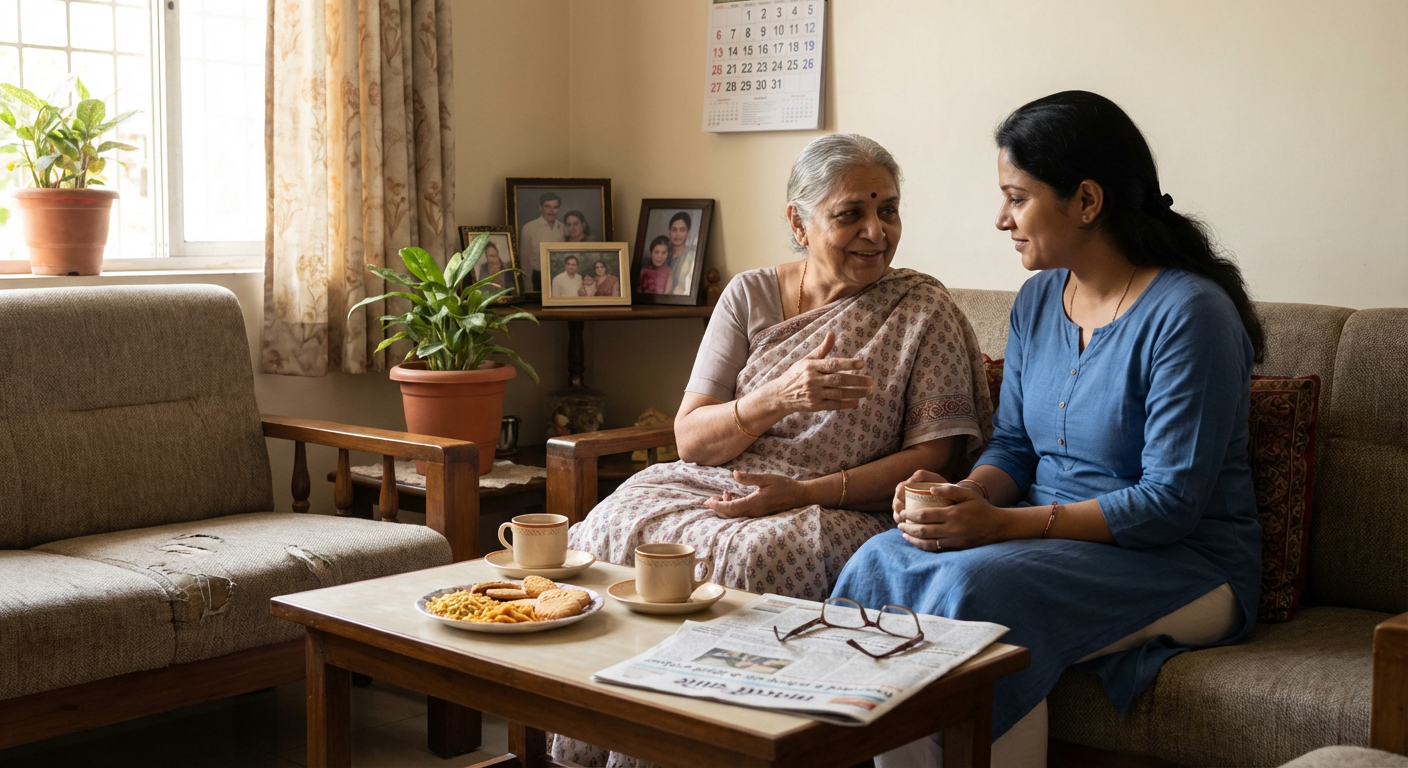
Infographic showing how companionship improves senior mental health   Simply having someone in the house isn’t the same as companionship. A caregiver who sits silently scrolling their phone while your parent sits silently watching TV isn’t providing companionship. It’s just supervised isolation.

Elements of Meaningful Companionship

Conversation

Not just practical talk (“Did you take your medicine?”) but genuine conversation. About the news, memories, opinions, and family stories. Talking to them is interesting, not as patients.

Shared Activities

Cooking together, watching cricket together, playing cards, doing puzzles, and reading newspaper articles aloud. Activities that create shared experience.

Physical Presence with Engagement

Sitting together having chai, walking in the park together, and going to the temple together. Being present with attention, not just proximity.

Listening to Stories

Elderly parents often repeat stories. Meaningful companionship listens anyway because the need being met isn’t information transfer; it’s feeling heard.

Respect for Preferences

Knowing how they like their tea, what time they prefer meals, which topics interest them, and which TV shows they enjoy. Personalized attention that says, “I see you as an individual.”

Signs Your Elderly Parent is Experiencing Loneliness

Many parents won’t directly say they’re lonely. They don’t want to burden children or admit vulnerability. Watch for indirect signs: Behavioral changes:
  • Calling you multiple times daily for minor reasons
  • Extended phone calls, they’re reluctant to end
  • Excessive focus on minor physical complaints (seeking attention/interaction)
  • Sleeping much more than usual
  • Stopped cooking proper meals
  • House becoming messier than its norm
Emotional changes:
  • Irritability or anger that seems disproportionate
  • Crying or emotional sensitivity
  • Talking repeatedly about the past
  • Expressing that life has no purpose
  • Saying things like “Don’t worry about me” or “I’m fine alone” frequently
Physical changes:
  • Weight loss from not eating well
  • Decline in grooming and appearance
  • Worsening of chronic conditions
  • More frequent illnesses
If these signs appear alongside the warning signs in [10 Warning Signs Your Elderly Parent Needs a Professional Caregiver], professional intervention becomes important.

Practical Ways to Provide Companionship

For Family Members (Local)

  • Daily check-ins: Not just phone calls, actual visits, even brief ones
  • Shared meals: Eat with them at least weekly, more if possible
  • Include them: Take them along for errands, introduce them to your friends
  • Technology help: Set up video calls with relatives, help them use WhatsApp
  • Activity planning: Temple visits, park walks, family functions keep them connected

For NRI or Distant Family Members

  • Scheduled video calls: Same time daily creates a routine they can anticipate
  • Involve them in your life: Show your home, your workplace, your children’s activities
  • Send things: Photos, small gifts, letters, tangible reminders they’re thought of
  • Coordinate local support: Arrange for neighbors, relatives, or professionals to visit

Professional Companionship Through Caregivers

This is where many families find the most consistent solution. A trained caregiver who understands that companionship is part of care, not separate from it. Pranyaas caregivers are trained to:
  • Engage in meaningful conversation
  • Participate in activities that the senior enjoys
  • Accompany them on outings
  • Provide consistent daily presence
  • Report emotional changes to the family
For families weighing care options, the companionship factor often determines success. This is one consideration in Home Care vs. Assisted Living: What is the Best Choice for Your Parent?. Home care can provide more personalized, one-on-one companionship than institutional settings.

The Caregiver’s Role in Emotional Support

A good caregiver becomes more than staff. They become a familiar presence, a daily companion, someone who knows your parents’ preferences and moods. What Pranyaas’ caregivers are trained to do:
  • Greet seniors warmly each morning
  • Ask about their sleep, their feelings, their plans
  • Share appropriate personal stories (relationship goes both ways)
  • Notice mood changes and report to family
  • Create small rituals, morning chai together, evening walk, watching a favorite show
  • Be patient with repeated stories
  • Never make seniors feel burdensome
This approach transforms care from task completion to relationship building.

Research Data: The Health Impact of Senior Loneliness

Health Outcome Finding Source
Mortality risk Loneliness increases the risk of early death by 26% National Academies of Sciences, USA
Dementia risk Socially isolated seniors are 50% more likely to develop dementia The Lancet Commission on Dementia
Heart disease Loneliness increases heart disease risk by 29% European Heart Journal
Stroke risk Social isolation increases stroke risk by 32% American Heart Association
Depression Lonely seniors are 4x more likely to experience depression World Health Organization
Cognitive decline Social engagement slows cognitive decline by up to 70% JAMA Internal Medicine
Indian context 50% of Indian seniors report experiencing frequent loneliness Longitudinal Ageing Study in India (LASI)
This data transforms how we should think about elder care. Companionship isn’t a luxury to add after medical needs are met. It’s a medical need itself

Building Companionship Into Daily Care

For families managing elder care, whether independently or with professional help, here’s how to prioritize companionship: Morning routine:
  • Start the day with warm interaction, not just tasks
  • Share tea before rushing into care activities
  • Ask how they slept, how they’re feeling
Throughout the day:
  • Engage during meals, not just serve food
  • Include them in household conversations
  • Create at least one shared activity daily
Evening routine:
  • Review the day together
  • Watch something they enjoy together
  • End day with a positive interaction
For comprehensive guidance on building care routines that include emotional support, see our A Family’s Complete Guide to Elderly Care at Home in India.

Conclusion

Companionship isn’t an optional add-on to elderly care. It’s as essential as medication management, fall prevention, and proper nutrition. Without regular, meaningful human connection, seniors decline faster mentally, emotionally, and physically. The good news: companionship is something you can provide. Whether through your own presence, coordinated family involvement, community connections, or professional caregivers trained in emotional support. If your parent is living alone, seems withdrawn, or has lost their spouse, addressing loneliness should be as urgent as addressing any physical health concern. The data is clear: socially connected seniors live longer, think more clearly, and feel better. Don’t wait until loneliness has caused visible damage. Start building companionship into your parents’ daily life now. Contact Pranyaas if you need support. Our caregivers understand that sitting with your parent over chai, listening to their stories, and being genuinely present is care, not something separate from it. Your parent doesn’t just need someone to hand them medication. They need someone who cares that they take it.

Frequently Asked Questions

Why is companionship important for elderly mental health?

Companionship reduces depression, slows cognitive decline, lowers stress hormones, and improves physical health outcomes. Research shows lonely seniors have 50% higher dementia risk and 26% higher mortality risk. Regular social connection gives the brain stimulation it needs to maintain function and gives seniors emotional reasons to stay engaged with life.

How does loneliness affect elderly parents physically?

Loneliness triggers chronic stress responses that increase inflammation, weaken immunity, raise blood pressure, and disrupt sleep. Over time, this increases risk of heart disease (29% higher), stroke (32% higher), and faster progression of existing conditions. Lonely seniors also eat poorly and neglect health maintenance.

What are the signs that my elderly parent is lonely?

Watch for: calling you frequently for minor reasons, reluctance to end phone calls, sleeping excessively, not eating properly, declining grooming, house becoming messier, irritability, excessive focus on physical complaints, talking about having no purpose, and withdrawal from previously enjoyed activities.

Can a caregiver provide real companionship or just physical care?

Trained caregivers can provide meaningful companionship through conversation, shared activities, consistent presence, and genuine relationship building. The key is hiring caregivers who understand emotional care as part of their role and matching caregivers with seniors based on personality compatibility, not just skills.

How can NRI children help lonely parents in India?

Schedule consistent daily video calls at the same time. Coordinate local support through relatives, neighbors, or professional caregivers. Send photos and small gifts that show you’re thinking of them. Involve them in your life by sharing your daily experiences. Consider professional companion care for consistent daily presence.

Leave A Comment

Need Any Helps ?

Get More Consultations