If your elderly parent is missing medications, falling frequently, losing weight unexpectedly, or showing confusion about daily tasks, these are clear signs they need professional caregiver support.
Many families notice these changes gradually and dismiss them as “normal aging.” But there’s a difference between slowing down and struggling to function safely. Recognizing warning signs early prevents medical emergencies, hospitalizations, and long-term health decline.
This guide covers 10 specific indicators that signal your aging parent needs more help than family visits can provide and when it’s time to consider professional home care.
Why Early Recognition Matters
Delaying professional care often leads to worse outcomes. When early warning signs go unnoticed, minor issues become medical crises.
The goal isn’t to take away independence. It’s to add support that maintains independence longer.
Families working with Pranyaas often say they wish they had recognized the signs earlier. The transition to professional care becomes smoother when it happens before a crisis, not after a fall, hospitalization, or sudden health decline.
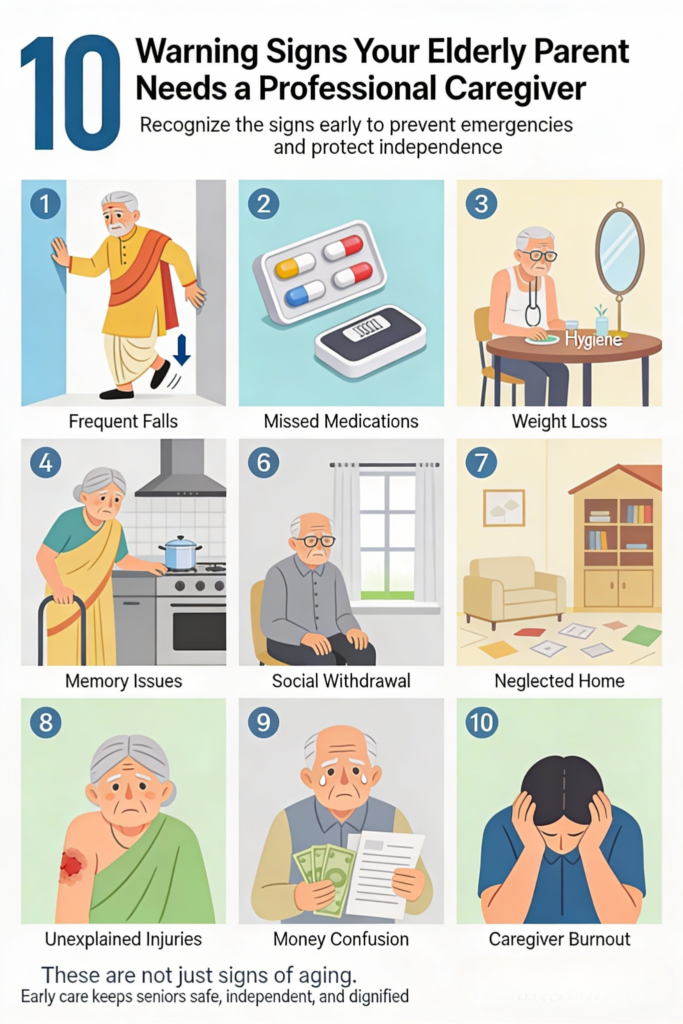
Sign 1: Frequent Falls or Balance Problems
Falls are the leading cause of injury-related deaths in Indians over 60. A single fall can result in hip fractures, head injuries, or permanent mobility loss.
What to watch for:
- Unexplained bruises on arms, legs, or face
- Holding walls or furniture while walking
- Fear of stairs or avoiding movement
- History of “near falls” they mention casually
- Unsteady gait or shuffling feet
If your parent has fallen more than once in six months, professional supervision reduces repeat incidents significantly. Pranyaas caregivers are trained in fall prevention and mobility assistance, helping seniors move safely without restricting their independence.
Related reading: How to Create a Safe Home Environment for Seniors with Dementia
Sign 2: Missed Medications or Incorrect Dosing
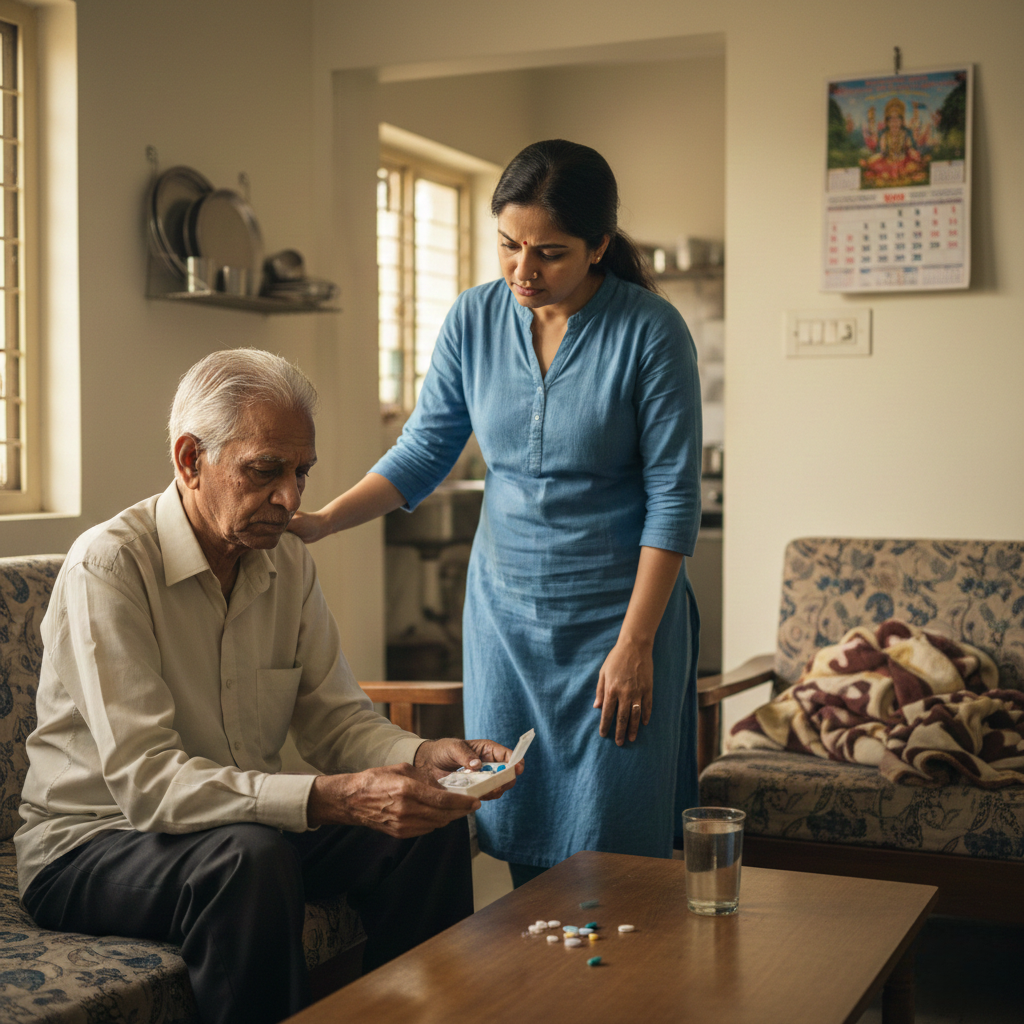
Medication mismanagement is one of the most dangerous yet overlooked signs. Seniors managing multiple prescriptions often forget doses, accidentally, or stop taking medicines without telling anyone.
What to watch for:
- Pills left in weekly organizers untouched
- Expired medicines in the cabinet
- Confusion about which medicine is for what
- Refills not ordered on time
- Complaints of dizziness or nausea (overdose signs)
Professional caregivers maintain medication logs, set reminders, and confirm each dose is taken correctly. This single intervention prevents hospitalizations more than any other home care activity.
Sign 3: Noticeable Weight Loss or Poor Nutrition
Unintentional weight loss in elderly parents signals multiple possible issues: difficulty cooking, loss of appetite, depression, dental problems, or underlying illness.
What to watch for:
- Clothes are becoming visibly loose
- The refrigerator is empty or filled with expired food
- Skipping meals or eating only tea and biscuits
- Difficulty chewing or swallowing
- No interest in food they previously enjoyed
A caregiver ensures regular, nutritious meals suited to health conditions. For seniors with diabetes or kidney issues, proper meal planning becomes even more critical. This is a core part of daily elderly care at home that family members managing from a distance often cannot monitor.
Sign 4: Declining Personal Hygiene
When a previously well-groomed parent starts neglecting bathing, oral care, or wearing the same clothes repeatedly, it indicates either physical difficulty or cognitive decline.
What to watch for:
- Body odor or unwashed hair
- Stained or unchanged clothing for days
- Uncut nails, unkempt appearance
- The bathroom shows signs of neglect
- Resistance to bathing (often due to fear of falling)
Personal hygiene decline often embarrasses families, so it goes unmentioned. But it’s a strong indicator that physical assistance is needed either due to mobility limitations, joint pain, or memory issues affecting routine.
Trained caregivers help with bathing, grooming, and toileting while maintaining dignity. Pranyaas caregivers receive specific training on providing personal care respectfully, especially for seniors who feel uncomfortable accepting help initially.
Sign 5: Increased Confusion or Memory Lapses
Occasional forgetfulness is normal. But when confusion affects daily functioning, forgetting to turn off the stove, getting lost in familiar areas, or repeating questions within minutes, it signals cognitive decline requiring supervision.
What to watch for:
- Forgetting recent conversations entirely
- Difficulty following simple instructions
- Getting confused about time, date, or place
- Leaving doors unlocked or the gas stove on
- Trouble recognizing familiar people
If your parent shows memory issues beyond occasional forgetfulness, professional care provides safety without institutionalization. Dementia care at home, when started early, keeps seniors in familiar environments where they feel more secure.
Related reading: How to Create a Safe Home Environment for Seniors with Dementia
Sign 6: Social Withdrawal and Isolation
A parent who previously enjoyed socializing but now refuses visitors, stops attending religious gatherings, or rarely leaves their room may be experiencing depression, hearing loss, or early dementia.
What to watch for:
- Declining invitations to family functions
- Not answering phone calls
- Loss of interest in hobbies
- Staying in bed most of the day
- Irritable when asked to go out
Companionship is as important as physical care. Pranyaas caregivers provide daily conversation, mental engagement, and accompany seniors to social or religious activities, addressing isolation alongside physical needs.
Related reading: The Importance of Companionship for Senior Mental Health
Sign 7: Neglected Home Environment
When a previously tidy home becomes cluttered, dirty, or disorganized, it indicates your parent is struggling with daily tasks. Unpaid bills, spoiled food, and general neglect are clear signals.
What to watch for:
- Piled-up dishes or garbage
- Unpaid utility bills or late payment notices
- Spoiled food in the refrigerator
- Dust accumulation, unclean bathrooms
- Broken items left unrepaired
Home neglect often happens gradually. Each visit, the house looks slightly worse. This signals physical difficulty with housework, cognitive decline affecting organization, or depression reducing motivation.
A caregiver manages daily household tasks, ensuring the living environment remains safe and hygienic. This also reduces fall risks from cluttered walkways.
Sign 8: Unexplained Bruises or Injuries
Bruises that your parent can’t explain, or injuries they minimize (“I just bumped into something”) often indicate falls they’re not reporting, either from embarrassment or memory gaps.
What to watch for:
- Bruises on arms, legs, hips, or face
- Cuts or scrapes withouta clear explanation
- Reluctance to discuss how injuries happened
- Frequent “minor accidents.”
Seniors often hide falls from family members, fearing they’ll lose independence. But unreported falls indicate a pattern that will continue and worsen without intervention.
Pranyaas care managers work with families to identify fall patterns and implement prevention measures without making seniors feel surveilled or restricted.
Sign 9: Difficulty Managing Finances
Missing bill payments, unusual bank transactions, or confusion about money indicate cognitive decline or vulnerability to financial exploitation.
What to watch for:
- Unpaid bills despite having funds
- Confusion about bank accounts or cards
- Unusual donations or purchases
- Missing cash from home
- Calls from unknown “officials” about money
Financial mismanagement is often the first sign families notice because it has visible consequences, such as disconnected utilities, legal notices, or calls from banks.
While caregivers don’t manage finances directly, having someone present daily provides oversight and alerts family members to unusual activity or suspicious callers.
Sign 10: Caregiver Burnout in Family Members
Sometimes the clearest sign isn’t in your parent, it’s in you. If the family caregiver is exhausted, irritable, neglecting their own health, or resenting caregiving duties, professional help is needed.
What to watch for (in yourself or family caregivers):
- Constant fatigue even after rest
- Snapping at your parent over small things
- Neglecting your own medical appointments
- Feeling trapped or hopeless
- Work performance declining
Caregiver burnout doesn’t just harm you; it affects the quality of care your parent receives.
Professional care isn’t replacing family love. It’s adding trained support so family relationships remain healthy. Pranyaas respite care services give family caregivers breaks for a few days or weeks to recover without leaving parents unsupported.
Related reading: A Family’s Complete Guide to Elderly Care at Home in India.
Key Research Data: Why These Warning Signs Matter
| Health Concern |
Statistical Finding |
Research Source |
| Chronic Conditions |
75% of elderly Indians have at least one chronic illness |
Ministry of Health and Family Welfare |
| Fall Risk |
1 in 4 seniors above 60 reported at least one fall in the past two years |
Longitudinal Ageing Study in India (LASI) |
| Medication Non-Adherence |
30% to 69% of elderly Indians don’t take medicines correctly |
Indian Journal of Pharmacology |
| Malnutrition |
Nearly 30% of elderly Indians are malnourished |
Indian Council of Medical Research (ICMR) |
| Dementia Prevalence |
5.3 million Indians live with dementia, projected to double by 2030 |
Alzheimer’s and Related Disorders Society of India |
| Loneliness |
50% of Indian seniors experience frequent loneliness |
LASI Study |
| Caregiver Burnout |
29% of family caregivers show clinical signs of depression |
India Development Review (IDR) |
These numbers show that warning signs aren’t isolated incidents; they’re part of larger patterns affecting millions of Indian seniors. Recognizing them early makes a measurable difference.
Conclusion
Recognizing warning signs early is the difference between planned, comfortable care and emergency decisions made under pressure.
The 10 signs covered in this guide, including medication issues, weight loss, hygiene decline, confusion, social withdrawal, home neglect, unexplained injuries, financial difficulty, and caregiver burnout, are not inevitable parts of aging. They are signals that your parent needs more support than they currently have.
Most families delay action because they hope things will improve, or because they fear their parent will resist help. But waiting typically makes the situation harder for both the senior and the family.
Professional care doesn’t mean giving up on your responsibilities. It means adding trained support that keeps your parent safer, healthier, and more independent for longer. At Pranyaas, we work with families to find the right level of care, whether that’s a few hours of daily assistance or round-the-clock support.
If you’ve noticed any of these warning signs, the best time to act is now. A conversation with your parent, a doctor’s assessment, or a consultation with a care service can clarify next steps without committing to anything permanent.
Your parent deserves to age with dignity. You deserve support in making that happen.
Frequently Asked Questions
How do I know if my elderly parent needs a caregiver or can still live alone?
If your parent shows three or more warning signs from this list, especially falls, medication issues, or confusion, they likely need daily support. The question isn’t whether they “can” live alone, but whether doing so is safe. A professional assessment helps determine the right level of care without removing independence unnecessarily.
What type of caregiver should I hire for my aging parent with memory problems?
For parents with memory issues or early dementia, hire caregivers specifically trained in cognitive care. They should understand redirection techniques, safety protocols, and how to maintain consistent routines. General domestic help is not suitable for seniors with memory problems. Pranyaas dementia care training prepares caregivers for these specific challenges.
How do I convince my parents to accept help from a professional caregiver?
Start with one small area of help rather than full-time care. Frame it as “trying out” rather than permanent. Let them meet the caregiver informally before starting. Involve their doctor; seniors often accept recommendations from physicians more readily than from children. Give them choices about timing and activities.
What is the difference between a caregiver and a trained nurse for elderly care?
A caregiver assists with daily activities, such as bathing, dressing, meals, medication reminders, and companionship. A trained nurse handles medical tasks injections, wound care, catheter management, and clinical monitoring. Many seniors need caregivers; those with complex medical conditions may need nursing support. Pranyaas provides both, depending on the care plan.
How much does a professional caregiver for elderly parents cost in India?
Part-time caregivers (8 hours) typically cost ₹15,000–25,000 monthly in metro cities. Full-time live-in caregivers range from ₹25,000 to ₹ 45,000 monthly. Trained nurses cost ₹35,000–70,000 monthly, depending on qualifications and duties. Costs vary by city and care complexity. Contact Pranyaas for customized quotes based on your specific requirements.
Take Action Before a Crisis
Most families contact professional care services after an emergency, such as a serious fall, hospitalization, or sudden health decline. By then, decisions are rushed and stressful.
If you’ve recognized warning signs in your parent, acting now gives you time to make thoughtful choices, involve your parent in decisions, and find the right caregiver match.
Contact Pranyaas for a consultation. Our team will help you assess your parents’ needs and recommend practical next steps, whether that’s part-time support, live-in care, or simply home safety modifications.
You don’t have to wait for a crisis to get help.






Leave A Comment