

24/7


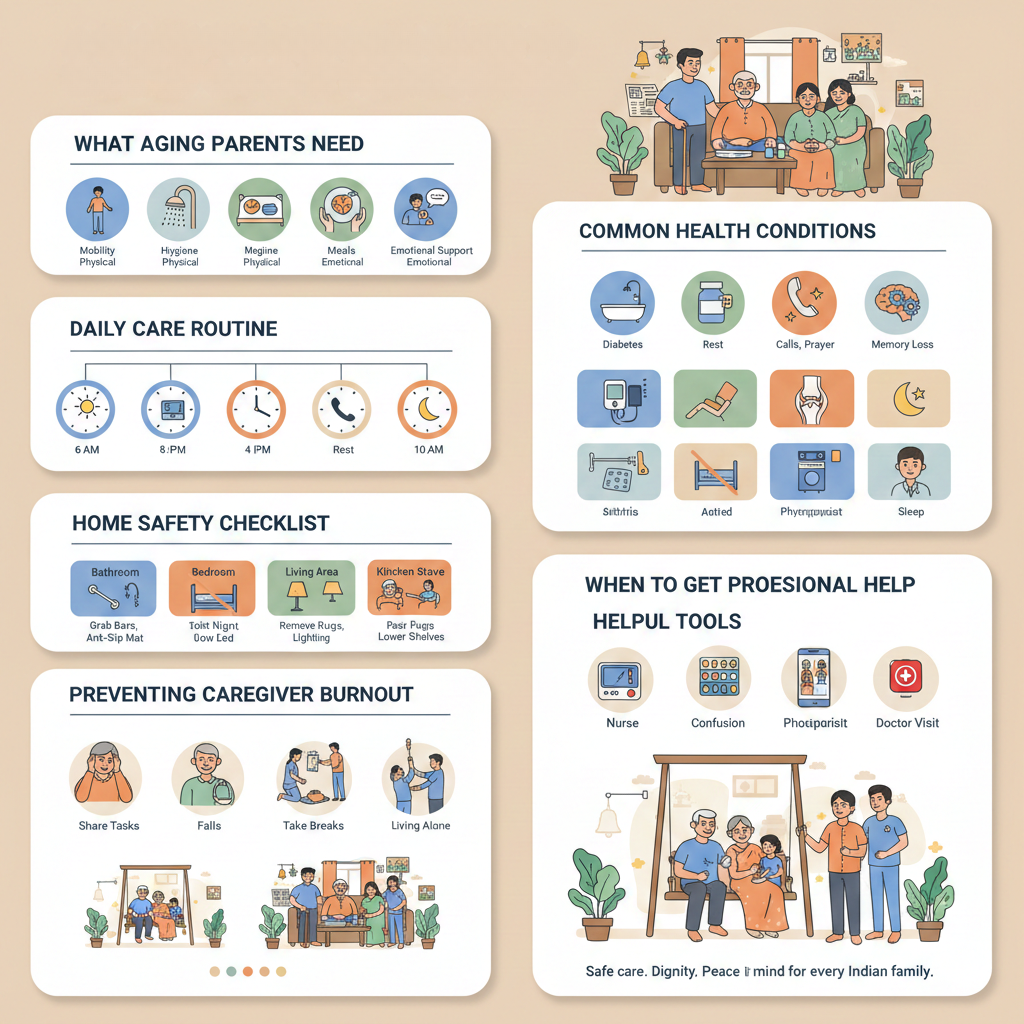 Before creating a care plan, understand what your parents actually require. Most families either overdo care (making parents feel helpless) or underdo it (missing critical needs).
| Time | Activity | Practical Tips |
|---|---|---|
| 6:00–7:00 AM | Wake up, toilet, oral hygiene | Keep the bathroom well-lit and non-slip mats in place |
| 7:00–8:00 AM | Morning tea, light walk, or stretching | Even 10 minutes of movement helps joints |
| 8:00–9:00 AM | Bath, grooming, morning medication | Use a shower chair if needed, and check the water temperature |
| 9:00–10:00 AM | Breakfast | High-fiber, easy to digest, and match dietary restrictions |
| 10:00 AM–12:00 PM | Rest, reading, TV, hobbies | Mental engagement is important |
| 12:00–1:00 PM | Lunch, afternoon medication | Smaller portions, avoid heavy fried food |
| 1:00–3:00 PM | Afternoon rest | A short nap is fine, but not too long |
| 3:00–5:00 PM | Light activity, visitors, phone calls | Social interaction time |
| 5:00–6:00 PM | Evening tea, light snack | Good time for BP/sugar check if needed |
| 6:00–7:00 PM | Prayer/spiritual time, TV | Respect their routines |
| 7:30–8:30 PM | Dinner, night medication | Early dinner aids digestion |
| 9:00–10:00 PM | Prepare for bed | Night light, water within reach, emergency phone ready |
| Research Category and Insights | Key Statistical Data (2025–26) | Official Research Source |
|---|---|---|
| Projected Senior Population Surge | India now has over 158 million seniors (11.1% of the population) | PIB Elderly in India Report 2025 |
| Chronic Disease and Multimorbidity | 75 percent of elderly individuals suffer from at least one chronic illness | Ministry of Health and Family Welfare |
| Diabetes Prevalence in Seniors | 1 in 5 Indians over the age of 45 now lives with diabetes | Lancet Global Health Study 2025 |
| Caregiver Burnout and Mental Health | 29 percent of family caregivers show clinical signs of depression | IDR Caregiving Research 2025 |
| Rising Preference for Independence | 26 percent of urban elderly now live alone or only with their spouse | JLL Senior Living Report 2024–25 |
| Home Healthcare Market Expansion | Market size projected to hit USD 15.51 billion by 2030 | TechSci Research India Report |
| Loneliness and Social Isolation | 50 percent of Indian seniors report suffering from frequent loneliness | Longitudinal Ageing Study in India (LASI) |
| Financial Dependency Trends | 43 percent of elders are fully financially dependent on their children | Anvayaa Elder Care Insights |
| Service Type | What They Do | When Needed |
|---|---|---|
| Attendant / Caregiver | Daily activities, companionship, and mobility help | General assistance |
| Trained Nurse | Medical care, injections, wound dressing, catheter care | Post-surgery, chronic illness |
| Physiotherapist | Mobility exercises, pain management, stroke recovery | After surgery, arthritis, stroke |
| Doctor Home Visit | Check-ups, prescriptions, and medical assessment | Routine monitoring, emergencies |
| 24/7 Live-in Care | Round-the-clock assistance | High-dependency cases |
| City | Part-Time Attendant (8 hrs) | Full-Time Live-in | Trained Nurse |
|---|---|---|---|
| Delhi NCR | ₹15,000–25,000/month | ₹25,000–45,000/month | ₹35,000–60,000/month |
| Mumbai | ₹18,000–30,000/month | ₹30,000–50,000/month | ₹40,000–70,000/month |
| Bangalore | ₹15,000–28,000/month | ₹28,000–45,000/month | ₹35,000–65,000/month |
| Tier 2 Cities | ₹10,000–18,000/month | ₹18,000–30,000/month | ₹25,000–40,000/month |



Leave A Comment