


Our Blog Details

  • Post By
  • Date
    January 29, 2026
  • Comments
    0
Elderly care at home means helping your aging parents with daily activities, health monitoring, emotional support, and safety while they continue living in their familiar surroundings. This includes assistance with bathing, eating, medication, mobility, doctor visits, and simply being present. For most Indian families, caring for elderly parents at home is both a responsibility and a preference over institutional care. At Pranyaas, we work with families across India, including NRIs managing parent care from abroad, to provide trained caregivers, nursing support, and medical coordination that fits into the home environment. This guide shares practical knowledge from years of hands-on experience in elderly home care. This guide covers:
  • What aging parents actually need (physical, emotional, medical)
  • Daily care routines that work
  • Home safety modifications
  • When to hire professional elder care services
  • How to manage care without burning out
Whether you’re a working professional managing parent care remotely or living with aging parents, this guide gives you practical, tested approaches.

Why Indian Families Prefer Home-Based Elder Care

Most families in India choose senior care at home over old-age homes. The reasons are straightforward:

Emotional Familiarity

Elderly parents feel safer in their own home. They know the neighbourhood, have their routines, and maintain social connections with neighbours and relatives.

Cultural Expectations

In Indian families, caring for parents is considered a duty. Moving them to an institution often carries social stigma, and many elderly parents resist the idea entirely.

Cost Factor

Quality old age homes in metro cities cost ₹25,000 to ₹80,000 per month. Home care — especially with family involvement combined with professional support from services like Pranyaas is often more affordable and personalized.

Better Recovery Outcomes

Post-surgery or post-hospitalization, patients recover faster at home. Hospital environments increase infection risk and cause disorientation in elderly patients. Pranyaas regularly supports families with post-operative care at home, where recovery rates improve significantly in familiar settings. When home care may not be suitable:
  • Advanced dementia requiring 24/7 clinical supervision
  • Medical conditions needing continuous hospital-grade monitoring
  • No family member available, even for oversight
  • The home environment cannot be made safe
Being honest about these limitations helps you make the right decision. This is often the stage where families begin noticing subtle changes that indicate more support is needed. Missed medications, repeated falls, declining hygiene, sudden weight loss, or increasing confusion are not simply signs of aging. They are early indicators that additional care is required. Understanding these signals early is important, which is why families benefit from recognizing 10 Warning Signs Your Elderly Parent Needs a Professional Caregiver before a crisis forces rushed decisions.

Understanding What Aging Parents Actually Need

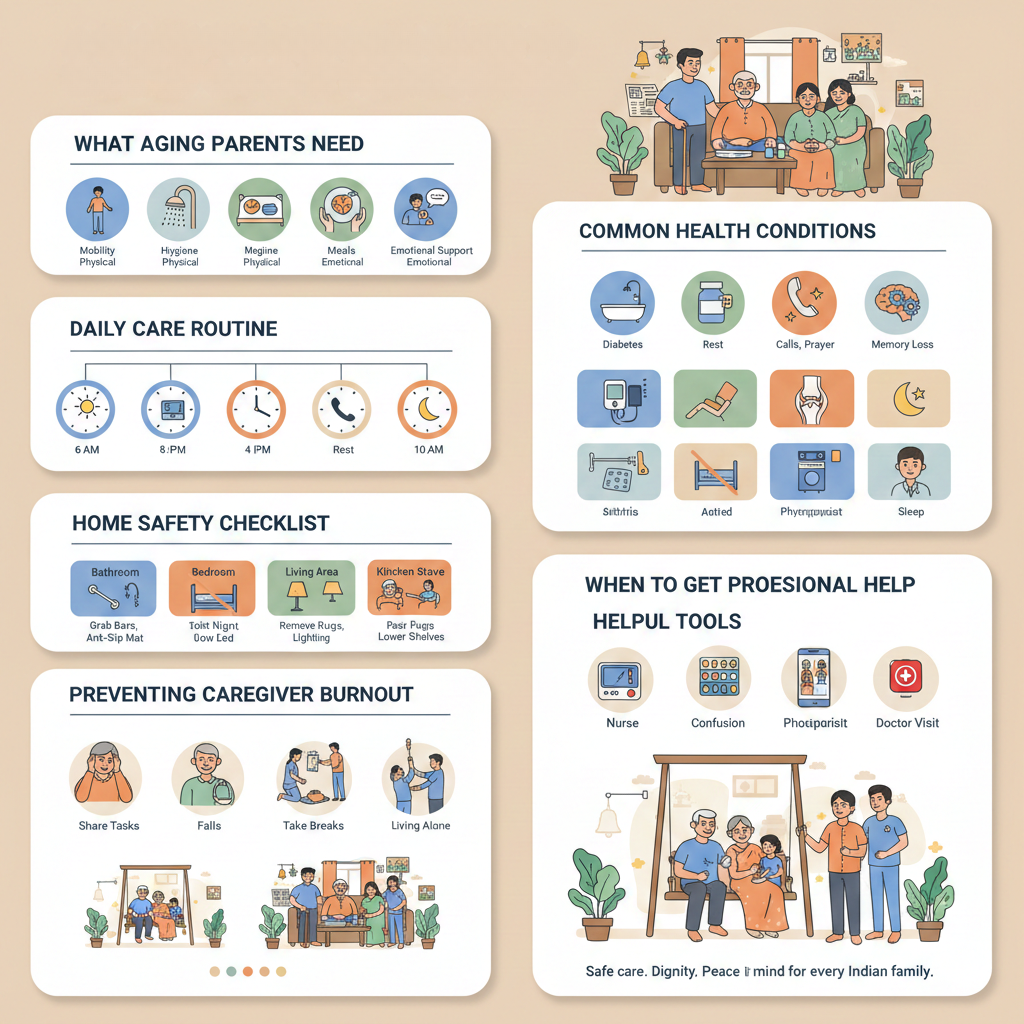
  Infographic guide to elderly care at home for Indian families   Before creating a care plan, understand what your parents actually require. Most families either overdo care (making parents feel helpless) or underdo it (missing critical needs).

Physical Needs

  • Mobility support: Help with walking, climbing stairs, getting in/out of bed
  • Personal hygiene: Bathing, grooming, dental care, toilet assistance
  • Nutrition: Proper meals considering health conditions (diabetes, BP, digestion issues)
  • Medication: Timely doses, refills, tracking side effects

Emotional Needs

  • Dignity: Not being treated like a patient or child
  • Purpose: Feeling useful, having activities to do
  • Connection: Regular conversation, not just task-based interaction
  • Independence: Making their own decisions wherever possible
One of the most overlooked emotional needs is companionship. Physical care alone cannot address loneliness. Seniors who lack regular human interaction are more likely to experience depression, anxiety, and cognitive decline. At Pranyaas, our caregivers are trained not just in physical assistance but in meaningful engagement through daily conversations, shared meals, and emotional presence that go beyond task completion. This reinforces The Importance of Companionship for Senior Mental Health as a core part of elderly care.

Medical Needs

  • Chronic disease management: Diabetes, hypertension, thyroid, arthritis
  • Regular check-ups: Eye, dental, and general physician visits
  • Emergency readiness: Knowing warning signs, having doctor contacts ready

Social Needs

  • Daily interaction: Beyond just family, neighbours, old friends, relatives
  • Mental stimulation: Reading, puzzles, television, hobbies
  • Religious/spiritual activities: Puja, temple visits, community gatherings

Daily Care Routine That Actually Works

A consistent daily routine reduces confusion for elderly parents and makes caregiving more manageable. Here’s a practical schedule based on what works for most Indian households and what Pranyaas caregivers follow with families we support:

Sample Daily Routine

Time Activity Practical Tips
6:00–7:00 AM Wake up, toilet, oral hygiene Keep the bathroom well-lit and non-slip mats in place
7:00–8:00 AM Morning tea, light walk, or stretching Even 10 minutes of movement helps joints
8:00–9:00 AM Bath, grooming, morning medication Use a shower chair if needed, and check the water temperature
9:00–10:00 AM Breakfast High-fiber, easy to digest, and match dietary restrictions
10:00 AM–12:00 PM Rest, reading, TV, hobbies Mental engagement is important
12:00–1:00 PM Lunch, afternoon medication Smaller portions, avoid heavy fried food
1:00–3:00 PM Afternoon rest A short nap is fine, but not too long
3:00–5:00 PM Light activity, visitors, phone calls Social interaction time
5:00–6:00 PM Evening tea, light snack Good time for BP/sugar check if needed
6:00–7:00 PM Prayer/spiritual time, TV Respect their routines
7:30–8:30 PM Dinner, night medication Early dinner aids digestion
9:00–10:00 PM Prepare for bed Night light, water within reach, emergency phone ready

Medication Management Tips

  • Use a weekly pill organizer available at any pharmacy for ₹100–300
  • Set phone alarms for medication times
  • Keep a written log of all medicines with dosage and timing
  • Store medicines in one designated place
  • Check expiry dates monthly
  • Never skip BP or diabetes medication without a doctor’s advice
Pranyaas’ caregivers maintain daily medication logs and share updates with family members and doctors. This systematic tracking prevents missed doses and identifies patterns that need medical attention.

Meal Planning for Elderly Parents

Indian diets work well for elderly care with minor adjustments:
  • Reduce salt and oil, critical for BP and heart health
  • Increase fiber roti over rice, and more vegetables
  • Softer foods, if there are chewing issues, khichdi, daliya, idli
  • Smaller, more frequent meals are easier to digest than three large meals
  • Adequate water intake, the elderly often forget to drink water

Common Health Conditions and Home Management

Most elderly parents deal with at least one chronic condition. Here’s how to manage the common ones at home:

Diabetes Management

  • Check blood sugar as per doctor’s schedule (fasting, post-meal, or random)
  • Watch for signs of low sugar: sweating, shaking, confusion. Give sugar water immediately
  • Keep a glucose log and share it with the doctor during visits
  • Foot care is a critical check for cuts and infections daily
  • Regular eye check-ups (every 6 months)

Hypertension (High BP) Management

  • Check BP at the same time daily and log it
  • Reduce salt intake significantly
  • Morning walks help control BP naturally
  • Watch for warning signs: severe headache, chest pain, vision problems
  • Never skip medication, even if BP seems normal

Arthritis and Joint Pain

  • Morning stiffness is normal. Gentle stretching helps
  • Use hot water bags for pain relief
  • Ensure easy access to chairs with armrests
  • Physiotherapy at home works better than just painkillers
  • Walking aids (canes, walkers) reduce fall risk
Pranyaas provides physiotherapy at-home services for seniors recovering from joint surgeries, strokes, or dealing with chronic mobility issues. Regular sessions with trained physiotherapists show better outcomes than occasional clinic visits.

Memory Issues and Early Dementia

  • Keep daily routine consistent; changes cause confusion
  • Label rooms and cupboards if needed
  • Don’t argue about forgotten things. Redirect the conversation instead
  • Safety first: switch off the gas when not supervised, secure the main door
  • An ID bracelet witha  phone number is helpful
For seniors with cognitive decline, safety needs go beyond basic fall prevention. Dementia-friendly homes use visual cues, simplified layouts, secured exits, motion lighting, and predictable routines. These changes reduce anxiety and wandering risks, which is why families managing memory loss must understand How to Create a Safe Home Environment for Seniors with Dementia as a separate and focused care strategy.

When to Call the Doctor Immediately

  • Sudden confusion or slurred speech
  • Chest pain or breathing difficulty
  • Fall with head injury or inability to move
  • Blood in urine or stool
  • Fever above 101°F that doesn’t reduce
  • Sudden vision or hearing loss
Pranyaas caregivers are trained to recognize these emergency signs and have direct lines to medical coordinators who can arrange doctor home visits or hospital transport within hours.

Making Your Home Safe for Elderly Parents

Falls are the leading cause of injury in elderly people. Most falls happen at home and are preventable.

Bathroom Safety (Highest Risk Area)

  • Install grab bars near the toilet and in the shower area (₹500–2,000)
  • Use anti-slip mats inside and outside the bathroom
  • Shower chair or stool for bathing
  • Handheld showerhead for easier use
  • Night light for nighttime bathroom visits

Bedroom Setup

  • The bed height should allow feet to touch the floor when sitting
  • Night lamp or motion-sensor light
  • Phone or emergency bell within arm’s reach
  • Clear path from bed to bathroom
  • A firm mattress too soft makes getting up difficult

Living Area Safety

  • Remove loose rugs and cables from walkways
  • Furniture should be stable no wobbly chairs
  • Adequate lighting in all areas
  • Keep frequently used items within easy reach
  • Sturdy handrails on stairs

Kitchen Safety

  • Automatic gas stove shut-off or induction cooking
  • Keep heavy items in lower cabinets
  • Non-slip mat near sink
  • Easy-grip utensils if there’s hand weakness
  • Water and snacks are accessible without climbing

Emergency Preparedness

  • Emergency contact list on refrigerator and near phone
  • Medical history file ready (diagnoses, medications, allergies)
  • House keys with a trusted neighbour
  • First aid kit stocked and accessible
  • Charged phone always within reach
When Pranyaas begins care for a new family, our care managers conduct a home safety assessment and recommend specific modifications based on the senior’s mobility level and health conditions.

Managing Care Without Burning Out

Caregiver burnout is real. Many adult children, especially daughters and daughters-in-law, end up exhausted, resentful, and physically unwell because they try to do everything alone.

Signs You’re Burning Out

  • Constant fatigue even after sleeping
  • Irritation over small things
  • Neglecting your own health
  • Feeling trapped or hopeless
  • Withdrawing from friends and activities
  • Getting sick frequently

How to Prevent Caregiver Burnout

Divide responsibilities clearly If there are multiple siblings, assign specific responsibilities. One handles medical appointments, another manages finances, and another does weekly visits. Write it down to avoid confusion. Accept help when offered When relatives say, “Let me know if you need anything,” give them specific tasks: “Can you stay with Papa on Saturday afternoon?” Take breaks Even 2 hours away from caregiving helps. Hire temporary help or ask family members to cover. Consider respite care Pranyaas offers short-term relief care, where a trained caregiver comes for a day, week, or month while you rest, travel, or handle personal matters. This is not abandonment; it’s practical self-care that makes you a better caregiver in the long run.

Balancing Work and Parent Care from a Distance

Many professionals manage parent care remotely. What works consistently is a system-based approach:
  • Part-time attendants help with daily tasks
  • Regular video calls maintain emotional connection
  • Trusted neighbours provide local oversight
  • Medical visits are planned during personal visits
  • All records are digitized and accessible
Pranyaas works with numerous NRI families who cannot be physically present. Our care managers send daily updates, coordinate with local doctors, and handle emergencies, giving families peace of mind across time zones. As health needs increase, families often face a difficult decision. Strengthening home care with professional support or transitioning to assisted living is not a failure. It is a practical evaluation of safety, health, finances, and emotional well-being. Understanding Home Care vs. Assisted Living: What is the Best Choice for Your Parent? helps families make informed, guilt-free decisions.

Key Research Insights for Indian Families Caring for Seniors

Research Category and Insights Key Statistical Data (2025–26) Official Research Source
Projected Senior Population Surge India now has over 158 million seniors (11.1% of the population) PIB Elderly in India Report 2025
Chronic Disease and Multimorbidity 75 percent of elderly individuals suffer from at least one chronic illness Ministry of Health and Family Welfare
Diabetes Prevalence in Seniors 1 in 5 Indians over the age of 45 now lives with diabetes Lancet Global Health Study 2025
Caregiver Burnout and Mental Health 29 percent of family caregivers show clinical signs of depression IDR Caregiving Research 2025
Rising Preference for Independence 26 percent of urban elderly now live alone or only with their spouse JLL Senior Living Report 2024–25
Home Healthcare Market Expansion Market size projected to hit USD 15.51 billion by 2030 TechSci Research India Report
Loneliness and Social Isolation 50 percent of Indian seniors report suffering from frequent loneliness Longitudinal Ageing Study in India (LASI)
Financial Dependency Trends 43 percent of elders are fully financially dependent on their children Anvayaa Elder Care Insights

When to Hire Professional Elderly Care Services

There’s no shame in hiring help. Professional elder care services often provide better quality care than untrained family members for specific medical needs.

Signs You Need Professional Help

  • Parent needs more physical assistance than you can provide
  • A medical condition requires trained nursing care
  • Caregiver burnout is affecting your health and work
  • Need for 24/7 supervision (dementia, fall risk)
  • Post-surgery or post-hospitalization recovery care
  • You live in a different city

Types of Elderly Home Care Services Available

Service Type What They Do When Needed
Attendant / Caregiver Daily activities, companionship, and mobility help General assistance
Trained Nurse Medical care, injections, wound dressing, catheter care Post-surgery, chronic illness
Physiotherapist Mobility exercises, pain management, stroke recovery After surgery, arthritis, stroke
Doctor Home Visit Check-ups, prescriptions, and medical assessment Routine monitoring, emergencies
24/7 Live-in Care Round-the-clock assistance High-dependency cases
Pranyaas provides all these services with trained, verified professionals. Our caregivers undergo background checks, skill assessments, and ongoing training specific to geriatric care needs.

What to Check Before Hiring

  • Background verification of the caregiver
  • Training certificates (for nurses, physiotherapists)
  • Trial period option
  • Clear contract with duties listed
  • Backup arrangement if the caregiver is absent
  • Company reviews and references

Cost of Elderly Care Services in India (2025 Estimates)

City Part-Time Attendant (8 hrs) Full-Time Live-in Trained Nurse
Delhi NCR ₹15,000–25,000/month ₹25,000–45,000/month ₹35,000–60,000/month
Mumbai ₹18,000–30,000/month ₹30,000–50,000/month ₹40,000–70,000/month
Bangalore ₹15,000–28,000/month ₹28,000–45,000/month ₹35,000–65,000/month
Tier 2 Cities ₹10,000–18,000/month ₹18,000–30,000/month ₹25,000–40,000/month
Costs vary based on experience, duties, and agency. Contact Pranyaas for customized care plans based on your specific requirements.

Practical Tips for Indian Families

Maintain Their Dignity

  • Ask before helping, don’t assume they need assistance
  • Knock before entering their room
  • Include them in family decisions
  • Let them handle their own money as long as possible
  • Respect their pace, don’t rush them

Deal with Resistance to Care

Many elderly parents refuse help even when they need it. What works:
  • Start with one small change, not everything at once
  • Frame it as “trying out” rather than permanent
  • Let them meet the caregiver informally first
  • Involving their parents often listen to doctors more than children
  • Give them choices: “Would you prefer morning help or afternoon help?”
Pranyaas care managers often meet with reluctant seniors first, without any pressure. Building trust before starting formal care makes the transition smoother for everyone.

Common Mistakes to Avoid

  1. Over-protecting and removing independence Let them do what they can. Doing everything for them speeds up the decline.
  2. Ignoring mental health Depression and anxiety are common in the elderly. Emotional support matters as much as physical care.
  3. No emergency plan What happens if there’s a medical emergency at 2 AM? Have a clear plan before you need it.
  4. Trying to do everything alone Asking for help is not a weakness. Burning out helps no one.
  5. Delaying professional help Many families wait too long before hiring help. By then, both parent and caregiver are struggling.
  6. Not talking about finances Discuss money early. Care is expensive. Know what resources are available.

Useful Tools and Technology

  • BP Monitor: Digital automatic monitors cost ₹1,500–3,000
  • Glucometer: For daily sugar checks, ₹800–2,000
  • Pill Organizer: Weekly boxes with compartments, ₹100–500
  • Medical Alert Devices: Emergency button that calls for help
  • Video Calling: WhatsApp video is the simplest for most elderly people
  • Fall Detection Watches: Automatic alerts when falls happen
  • Medication Reminder Apps: Practo, MedManage, or simple phone alarms

Hear From Families Who Trust Pranyaas

“I always wished I could do more for my mother, but distance made it impossible. Pranyaas became my extended family — now, when she says ‘Don’t worry, they take care of me as you do’, I know I made the right choice.” — NRI Client, Pune “The time difference and distance made it hard to be there for my parents the way I wanted. But ever since Pranyaas started caring for them, I hear a calmness in their voice that I’d missed for years. It’s the peace every child living abroad wishes for.” — NRI Client, Mumbai “After my father’s hip surgery, we didn’t know how to manage his recovery at home. Pranyaas sent a trained nurse and physiotherapist who worked together. He’s walking independently now. We couldn’t have done this alone.” — Family in Delhi NCR

Conclusion

Effective elderly care at home is a continuous process of adjustment rather than a one-time setup. As needs change, the care plan must also change. The goal is to create an environment where safety and medical monitoring do not come at the cost of a senior’s dignity or comfort. By focusing on practical home modifications, structured medication management, and professional clinical oversight, families can make sure their aging parents receive proper attention while enjoying the emotional security of their own homes. Choosing to provide care at home is an act of responsibility, but it requires a practical approach to be successful. Whether you are managing the care yourself or partnering with a dedicated service provider like Pranyaas, prioritizing consistent health tracking and fall prevention will always yield the best long-term outcomes for your parents’ quality of life.

Frequently Asked Questions (FAQs)

How do I choose the best elderly care services for my parents in India?

Look for providers that offer a detailed initial assessment. The service should provide trained staff who understand specific geriatric needs rather than general domestic help. Check if the service includes clinical supervision by a registered nurse or care manager. Pranyaas conducts comprehensive assessments before starting care, matching caregivers to specific health conditions and family preferences.

What are the most important elderly care tips for families?

The most important tips include:
  • Mobility safety: Remove all trip hazards like loose wires or rugs
  • Medication consistency: Use a pill organizer to prevent double-dosing
  • Hydration and Nutrition: Monitor water intake and provide high-protein meals
  • Social Engagement: Keep parents connected with family and friends

How can I take care of elderly parents at home while working full-time?

Managing care while working requires systematizing the routine. Use technology like smart cameras for remote monitoring, set up automated medicine dispensers, and hire a professional care coordinator. Pranyaas care managers act as your eyes and ears, managing logistics and medical appointments so you can focus on quality time with your parents.

What are the signs that a senior needs professional home care?

Consider professional help if you notice:
  • Unexplained bruising (indicating frequent falls)
  • Weight loss or missed meals
  • Poor hygiene or a neglected living environment
  • Confusion regarding medication schedules
  • Missed doctor appointments

Can home care manage patients with dementia or Alzheimer’s?

Yes, home care is often preferred for dementia patients because a familiar environment reduces agitation. Care involves creating a safe environment, maintaining a strict daily schedule, and using specialized caregivers trained in redirection techniques. Pranyaas caregivers receive specific training in dementia care protocols.

How do I handle a parent who is resistant to home care?

Avoid using medical labels. Instead of saying you are hiring a “nurse,” introduce the professional as an “assistant for household management.” Focus on the benefit of maintaining their independence rather than highlighting their limitations. Pranyaas care managers often meet reluctant seniors informally first to build trust before formal care begins.

Next Steps

Start with the self-assessment checklist in this guide. Identify your parents’ top three needs and address those first. If you’re struggling to manage care alone or need trained caregivers, attendants, nursing support, or physiotherapy at home, Pranyaas provides professional elderly care services across major Indian cities. Call us for a free consultation to discuss your parents’ specific needs. Our care managers will help you create a practical care plan that works for your family. You don’t have to figure this out alone.

Leave A Comment

Need Any Helps ?

Get More Consultations