

Our Blog Details

  • Post By
  • Date
    February 28, 2026
  • Comments
    0
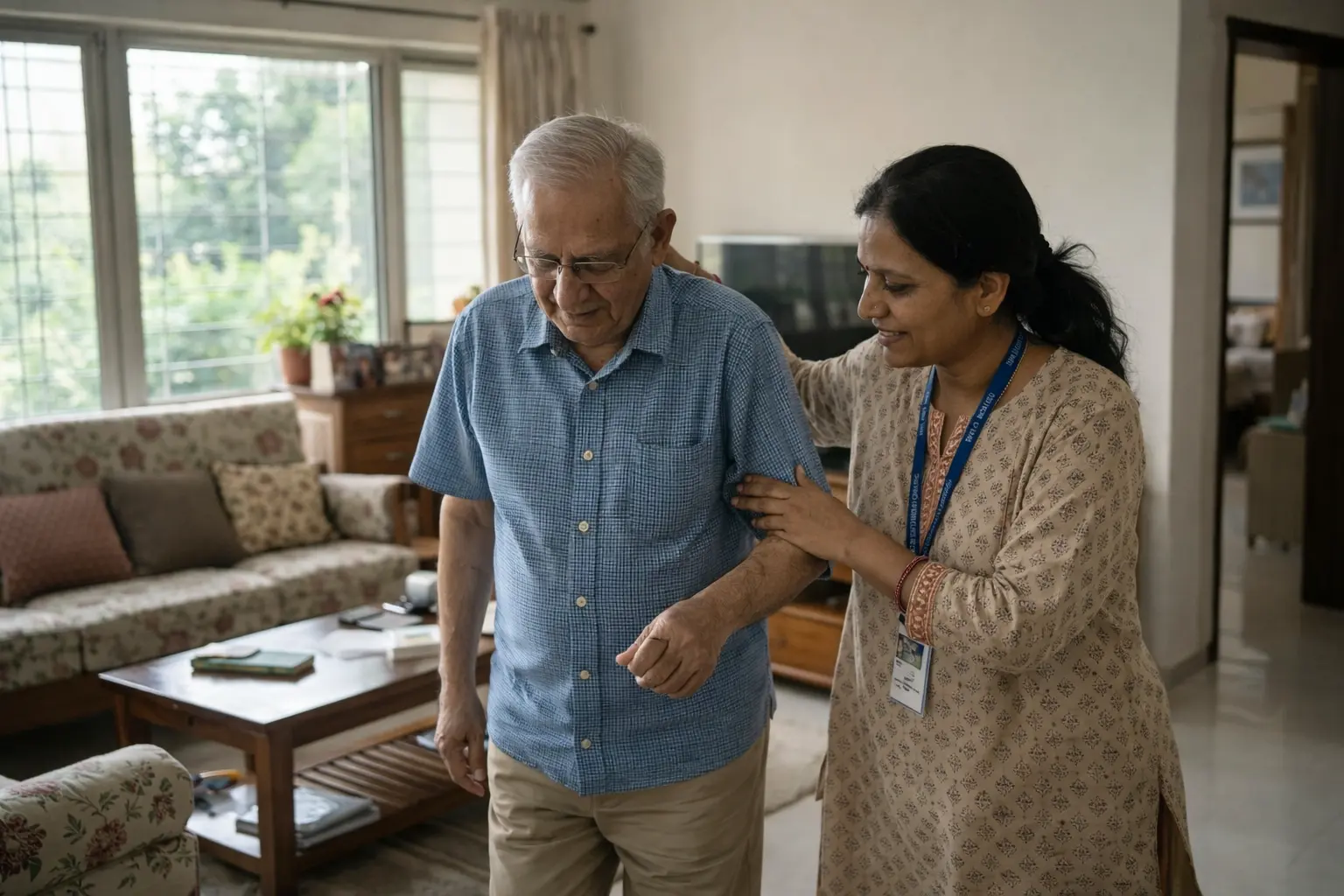
Professional in-home elderly care is important because aging parents need consistent medical monitoring, physical assistance, and emotional support that family members alone cannot provide while managing work and other responsibilities.   This isn’t about replacing family love. It’s about adding trained support so your parent receives proper care while you maintain your ability to earn, raise children, and live your own life without guilt or exhaustion.   At Pranyaas, we work with families across India who delayed hiring professional care for years, believing they could manage alone. Most tell us the same thing: “We should have done this sooner. Papa is happier, healthier, and we’re no longer fighting about who will take leave from work.”   This guide explains why professional home care matters, when families actually need it, and how it improves outcomes for both seniors and their children.

The Reality of Aging in Indian Families Today

The traditional joint family system is changing. According to the Longitudinal Ageing Study in India (LASI), 26% of urban elderly now live alone or only with their spouse. Adult children have moved to other cities or countries for careers.   Even when families live together, the situation has changed:
  • Both spouses work full-time
  • Commutes consume hours daily
  • Young children need attention
  • Work from home still means working
  The result is that elderly parents spend most of their day alone, even in the same house. Professional care fills this gap with a consistent, trained presence.   For comprehensive guidance on managing all aspects of your parents’ health needs, see our guide on How to Manage Daily Healthcare Needs of an Elderly Parent at Home.

Why Professional Care Makes a Difference

Health Factor Finding Source
Chronic disease prevalence 75% of elderly Indians have at least one chronic condition Ministry of Health and Family Welfare
Medication errors 30% to 69% of the elderly do not take medicines correctly without supervision Indian Journal of Pharmacology
Fall injuries Falls are the leading cause of injury death in people over 60 World Health Organization
Depression rates 50% of Indian seniors report frequent loneliness LASI Study
Caregiver burnout 29% of family caregivers show clinical signs of depression India Development Review
Recovery outcomes Patients with consistent care recover 40% faster from surgeries National Institutes of Health
  These numbers show that elderly care requires more than good intentions. It requires consistent, trained attention that most family situations cannot provide.

What Professional Elderly Care Actually Includes

Many families imagine professional care means a nurse in uniform giving injections. The reality is broader and more practical.

Daily Living Assistance

  • Helping with bathing, grooming, and dressing
  • Assistance with toilet needs and mobility
  • Support for walking, sitting, and movement
  • Accompanying them within the home safely

Medical Support

  • Medication reminders and administration
  • Monitoring blood pressure, blood sugar, and vital signs
  • Wound dressing and post surgery care
  • Coordination with doctors for appointments and reports
Understanding medication management is critical. Many families struggle with this, which is why we’ve created a detailed guide on How to Give Medicine to Elderly Parents at Home Without Making Mistakes.

Nutrition Management

  • Preparing meals suited to health conditions
  • Ensuring proper hydration throughout the day
  • Monitoring food intake and appetite changes
  • Managing dietary restrictions for diabetes, kidney issues, or heart conditions
Proper nutrition planning requires knowledge of what aging bodies need. Our guide on the 7 Day Meal Plan for Elderly People Including a Complete Diet Plan for Seniors provides practical meal structures.

Emotional Companionship

  • Meaningful conversation and engagement
  • Accompanying them for walks, temple visits, or outings
  • Mental stimulation through activities they enjoy
  • Consistent presence that reduces loneliness

Emergency Response

  • Recognizing warning signs of medical emergencies
  • Knowing when and how to respond
  • Contacting family and doctors immediately
  • Providing first response until medical help arrives
When emergencies happen, trained caregivers respond appropriately. Learn more about handling critical situations in our guide on How to Handle Common Health Emergencies of Elderly People at Home.

When Families Actually Need Professional Care

Scenario 1: Children Living in Other Cities

Rajesh works in Bangalore. His parents live in Lucknow. He visits every two months and calls daily. But phone calls cannot:
  • Check if his father actually took his diabetes medicine
  • Notice that his mother’s appetite has decreased
  • Help his father get to the bathroom at night
  • Respond if someone falls
Professional care provides daily oversight that distance makes impossible.

Scenario 2: Both Children Working Full Time

Priya and her husband both work corporate jobs in Mumbai. They live with her mother-in-law, who has arthritis and early memory issues. From 9 AM to 7 PM, Amma is alone. She once left the gas on for three hours. Another time, she fell trying to reach the kitchen shelf and lay on the floor until Priya returned home. A daytime caregiver solved both problems while allowing Priya and her husband to work without constant anxiety.

Scenario 3: Post Surgery Recovery

After hip replacement surgery, seniors need:
  • Help with movement and physiotherapy exercises
  • Wound care and infection monitoring
  • Medication management, including pain relief
  • Encouragement to do prescribed exercises
Family members taking leave from work for six to eight weeks isn’t practical. Professional care provides the consistent support recovery requires.

Scenario 4: Early Dementia Care

When memory issues begin, safety risks multiply. Seniors may:
  • Forget they’ve already taken medicine and take it again
  • Leave the house and get disoriented
  • Not recognize danger from hot surfaces or stairs
  • Become agitated when confused
  Professional caregivers trained in dementia care understand how to manage these situations safely and calmly.

Scenario 5: After Losing a Spouse

Widowed parents often decline rapidly. The surviving spouse was their primary companion, their reason to maintain routines, their motivation to eat properly, and care for themselves.   Professional companionship care fills this gap with consistent presence during the most vulnerable transition period.

Why Family Care Alone Often Falls Short

This is not a criticism of family love or commitment. It’s a practical observation from working with hundreds of Indian families.

Time Constraints

Working adults have 10 to 12-hour commitments, including commute. Remaining hours go to children, household management, and basic rest. There simply isn’t enough time for consistent elderly care.

Lack of Training

Giving insulin injections, managing catheter care, recognizing stroke symptoms, and handling dementia agitation: these require training. Love doesn’t substitute for knowledge.

Physical Demands

Helping a 75 kg adult move from bed to wheelchair, supporting them in the bathroom, lifting them after a fall: these tasks strain untrained bodies. Professional caregivers know proper techniques that prevent injury to themselves and the senior.

Emotional Exhaustion

Watching a parent decline is emotionally draining. Adding physical caregiving exhausts family members. Burned-out caregivers provide worse care, resent their situation, and damage family relationships.

Role Confusion

Being both child and caregiver creates tension. A parent may resist bathing help from their daughter because of dignity concerns. The same help from a professional caregiver feels less embarrassing.

How Professional Care Improves Outcomes

Better Medication Compliance

Trained caregivers ensure medications are taken correctly, on time, every day. They notice side effects and report to doctors. This single factor prevents most medication-related hospitalizations.

Faster Recovery

Post surgery patients with consistent professional care show faster recovery rates. They complete physiotherapy exercises, eat properly, and avoid complications from neglected wound care.

Reduced Fall Risk

Professional caregivers identify fall hazards, assist with mobility, and ensure seniors don’t attempt dangerous movements alone. Falls prevented means fractures prevented.

Improved Nutrition

When someone prepares meals specifically for them and sits with them while eating, seniors eat better. Appetite improves with companionship. Nutrition improves with proper meal planning.

Better Mental Health

Consistent human presence, meaningful conversation, and daily engagement reduce depression and slow cognitive decline. Seniors with companionship show better mental health outcomes than isolated seniors.

Family Relationship Preservation

When professional caregivers handle daily care tasks, family visits become quality time rather than task management. Children can be children again rather than exhausted caregivers.

Choosing the Right Level of Care

Professional care isn’t one size fits all. Options range from minimal to comprehensive:

Part-Time Care (4 to 8 hours)

Best for: Seniors who are mostly independent but need daytime supervision, medication reminders, meal preparation, and companionship while family works. Cost range: ₹15,000 to ₹25,000 monthly in metro cities.

Full Time Care (12 hours)

Best for: Seniors who need consistent assistance throughout the day, have mobility limitations, or require regular medical monitoring. Cost range: ₹25,000 to ₹40,000 monthly in metro cities.

Live In Care (24 hours)

Best for: Seniors with dementia, high fall risk, post surgery recovery, or those who cannot be safely left alone at any time. Cost range: ₹35,000 to ₹55,000 monthly in metro cities.

Nursing Care

Best for: Complex medical needs, including wound care, injections, catheter management, oxygen support, or post hospitalization recovery. Cost range: ₹45,000 to ₹80,000 monthly, depending on medical complexity.

What to Look for in Professional Care Services

Trained and Verified Caregivers

  • Background verification completed
  • Training in elderly care, specifically, not just general nursing
  • Experience with the conditions your parent has
  • Understanding of Indian family dynamics and cultural preferences

Care Coordination

  • Regular communication with family
  • Coordination with doctors and medical appointments
  • Documentation of daily activities and health observations
  • Emergency protocols are clearly established

Backup Systems

  • Replacement caregiver available if the primary caregiver is unavailable
  • Emergency contact systems
  • Supervision by care managers, not just individual caregivers working alone

Flexibility

  • Ability to adjust care levels as needs change
  • Trial periods before long-term commitment
  • Clear contracts with transparent pricing

Addressing Common Concerns

“My parents will feel abandoned if we hire outside help.”

Most parents initially resist but quickly adapt when they experience consistent, respectful care. Many develop genuine friendships with their caregivers. The key is involving parents in the selection process and framing care as support for their independence rather than replacement of family.

“Professional care is too expensive.”

Compare against alternatives: lost income from quitting jobs, medical bills from preventable complications, and emergency hospitalizations from unmonitored conditions. Professional care often costs less than the consequences of inadequate care.

“Strangers in our home feel uncomfortable.”

This concern fades quickly when families see the difference good care makes. Professional caregivers are trained to respect home environments, family dynamics, and senior preferences.

“We should be able to manage ourselves.”

Managing is different from managing well. Your parent deserves more than survival-level care. They deserve to be genuinely cared for by people trained to do it properly.

Conclusion

Professional in-home elderly care is important because aging parents need consistent, trained support that family love alone cannot provide in modern circumstances.   This isn’t about whether you love your parents. It’s about whether they receive the daily attention their health requires while you maintain the ability to work, care for your own family, and live without constant guilt and exhaustion.   The families who work with Pranyaas consistently report the same outcomes: their parents are healthier, happier, and safer. Family relationships improve because visits become quality time rather than rushed caregiving. Everyone sleeps better knowing professional support is in place.   If your family is struggling to manage elder care, or if you’re noticing that your parent needs more attention than current arrangements provide, professional care deserves serious consideration.   Contact Pranyaas for a free consultation. We’ll help you assess your parents’ needs, explain care options honestly, and find an arrangement that works for your family’s specific situation. Your parent deserves proper care. You deserve support in providing it.

Frequently Asked Questions (FAQs)

Why is professional elderly care at home important for aging parents?

Professional care provides consistent medical monitoring, physical assistance, and emotional support that family members cannot maintain while working. Trained caregivers ensure medication compliance, fall prevention, proper nutrition, and emergency response, which improves health outcomes and reduces hospitalizations.

When should families consider hiring professional elderly care?

Consider professional care when your parent has chronic conditions requiring monitoring, mobility limitations, memory issues, post surgery recovery needs, or when family caregivers are showing signs of burnout. If your parent spends most of the day alone, professional care adds safety and companionship.

How much does professional elderly care cost in India?

Part-time care costs ₹15,000 to ₹25,000 monthly. Full-time care ranges from ₹25,000 to ₹40,000 monthly. Live-in care costs ₹35,000 to ₹55,000 monthly. Nursing care for complex medical needs costs ₹45,000 to ₹80,000 monthly. Costs vary by city and care complexity.

What is the difference between a caregiver and a nurse for elderly care?

Caregivers assist with daily activities, including bathing, meals, mobility, and companionship. Nurses handle medical tasks including injections, wound care, catheter management, and clinical monitoring. Many seniors need caregivers, while those with complex medical conditions may need nursing support.

Will my elderly parent accept help from a professional caregiver?

Most parents initially resist but adapt within weeks when they experience respectful, consistent care. Involve your parent in caregiver selection, start with limited hours before expanding, and frame care as supporting their independence rather than taking it away.
Popular Tags :

Leave A Comment

Need Any Helps ?

Get More Consultations