

Our Blog Details

  • Post By
  • Date
    May 19, 2026
  • Comments
    0
NRI families can support aging parents in India through consistent communication, trusted home care services, health monitoring, emergency planning, and emotional engagement. With proper coordination and professional caregiving support, elderly parents remain safe, emotionally connected, and comfortable while living independently at home. These efforts help families bridge physical distance while ensuring senior wellbeing. Managing elder care from abroad requires structured planning and reliable support systems. How Families Can Manage Elderly Care Services at Home in India offers detailed guidance for coordinating quality care remotely.

Why Elder Care Becomes Challenging for NRI Families

Distance creates unique caregiving challenges that require thoughtful planning and support systems. NRI families face emotional stress and practical difficulties when managing elderly parent care from abroad. Common challenges include:
  • Physical separation makes daily monitoring impossible
  • Emergency response delays create anxiety and safety concerns
  • Time zone differences complicate real-time communication
  • Limited visibility into parents’ daily health and emotional state
  • Coordination difficulties with local relatives or neighbors
  • Guilt and worry about not being physically present
  • Work-life balance struggles while managing caregiving responsibilities remotely
  • Medical appointment oversight becomes complicated without local presence
  • Medication adherence concerns when parents manage prescriptions alone
  • Social isolation worries as parents age and their social circles shrink
These challenges intensify when elderly parents experience health declines, mobility limitations, or cognitive changes. Recognizing these difficulties early helps families create proactive caregiving plans rather than reacting to crises.

How NRI Families Can Stay Involved in Parents’ Daily Well-being

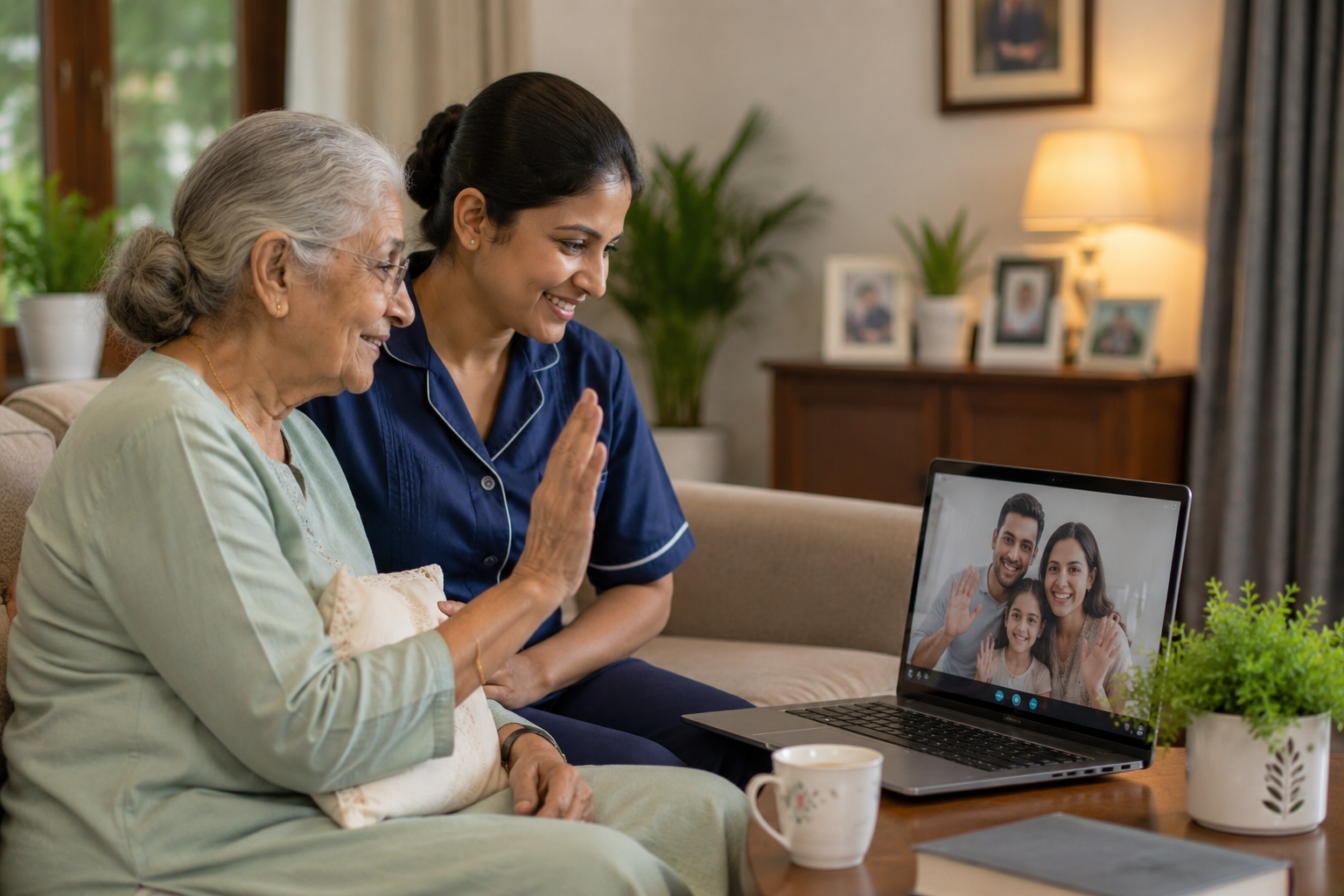
Regular involvement helps NRI families maintain emotional connections and monitor parent wellbeing despite physical distance. Structured communication routines provide reassurance for both seniors and adult children abroad.
Support Practice Purpose Benefit for Seniors
Daily video calls Visual health monitoring and emotional connection Reduces loneliness and provides routine interaction
Scheduled medication reminders Ensures prescription adherence Prevents missed doses and health complications
Weekly health check-ins Tracks symptoms and concerns Enables early intervention for health issues
Shared calendar systems Coordinates medical appointments Prevents missed doctor visits
Local relative involvement Provides emergency backup support Offers immediate assistance when needed
Meal delivery coordination Ensures proper nutrition Maintains health and reduces cooking burden
Effective involvement means creating predictable communication patterns. Morning check-ins establish daily routines, while evening calls offer companionship during lonely hours. Video calls reveal visual cues about health, home safety, and emotional state that phone conversations miss. Technology helps NRI families stay informed. Shared medication reminder apps, health tracking devices, and video monitoring systems provide peace of mind. However, technology supplements rather than replaces human connection and professional caregiving support. Involving trusted neighbors or relatives creates local support networks. These individuals can respond to immediate needs, attend medical appointments when necessary, and provide social interaction that video calls cannot replace.

When Professional Home Care Support Becomes Necessary

Certain situations require professional caregiving expertise beyond family involvement. Recognizing these moments helps families arrange appropriate support before emergencies occur. Professional home care becomes essential when:
  • Chronic health conditions require medication monitoring, wound care, or symptom tracking
  • Mobility limitations make daily activities like bathing, dressing, or walking difficult
  • Memory-related concerns affect safety, medication adherence, or daily routines
  • Seniors living alone face increased fall risks and emergency response needs
  • Post-hospital recovery demands specialized rehabilitation or medical observation
  • Family caregiver burnout affects relatives providing informal support
  • Complex medication regimens require professional oversight
  • Nutritional concerns emerge from difficulty cooking or grocery shopping
  • Behavioral changes suggest cognitive decline or depression
How Families Can Choose the Right Elderly Care Services for Aging Parents provides detailed guidance for selecting appropriate professional caregiving support based on specific senior needs. Professional caregivers offer skills that family members cannot provide remotely. Trained staff recognize subtle health changes, manage medical equipment, coordinate with healthcare providers, and respond appropriately to emergencies. This expertise prevents minor issues from becoming serious complications.

How Companion Care Helps Seniors Living Alone

Loneliness significantly impacts elderly wellbeing, affecting physical health, cognitive function, and emotional resilience. Companion care addresses social isolation while supporting daily living needs. Companion caregivers provide:

Emotional reassurance 

Through consistent presence and meaningful conversation. Seniors feel valued and connected rather than forgotten or burdensome to distant family members.

Social interaction 

That stimulates cognitive function and maintains communication skills. Regular conversations, shared activities, and engaged listening combat the depression and withdrawal that often accompany aging.

Daily routine assistance 

Including meal preparation, light housekeeping, medication reminders, and appointment accompaniment. This support enables seniors to maintain independence while ensuring safety and well-being.

Reduced anxiety 

About emergencies or sudden health changes. Knowing someone checks on them regularly helps elderly parents feel secure rather than vulnerable.

Improved confidence 

For continuing activities they enjoy. Companionship caregivers encourage hobbies, social outings, and physical activity that isolated seniors might abandon. When Do Seniors Need Companion Care at Home? explores specific indicators that companionship support would benefit elderly parents, helping families recognize appropriate timing. Companion care differs from medical caregiving by focusing on quality of life rather than purely clinical needs. For seniors without complex health conditions, companionship addresses the emotional and social dimensions of well-being that medication cannot treat.

How Families Can Arrange Safe Home Care Services Remotely

Arranging caregiving support from abroad requires careful planning and verification processes. Professional caregiving agencies simplify coordination while ensuring safety and quality standards.
Care Arrangement Step Why It Matters
Research licensed caregiving agencies Ensures regulatory compliance and professional standards
Verify caregiver background checks Protects elderly parents from potential harm or exploitation
Establish clear communication systems Enables regular updates and immediate emergency contact
Define specific care responsibilities Prevents misunderstandings about expected services
Create emergency response protocols Ensures appropriate action during health crises
Schedule regular care plan reviews Adapts support as senior needs change
Arrange payment systems Maintains consistent service without interruption
Document care expectations Provides accountability and quality benchmarks
Professional caregiving agencies handle recruitment, training, background verification, and replacement coverage when individual caregivers are unavailable. This infrastructure reduces the burden on NRI families while maintaining consistent care quality. Communication systems should include multiple contact methods. Daily written updates via messaging apps, weekly video conferences with caregivers, and monthly detailed reports help NRI families stay informed about parent wellbeing without micromanaging. Emergency protocols must clarify who responds to specific situations. Define which health changes require immediate hospital transport, which warrant doctor consultations, and which need family notification. Clear guidelines prevent confusion during stressful moments. Regular reviews ensure care remains appropriate as needs evolve. What begins as companion care might eventually require skilled nursing support. Responsive adjustments prevent gaps in necessary services.

Safety and Emergency Planning for Aging Parents

Safety concerns intensify as parents age, particularly when children live abroad and cannot respond immediately to emergencies. Proactive planning reduces risks and ensures rapid appropriate responses. Essential safety planning includes:

Fall prevention

Through home modifications like grab bars, adequate lighting, removing tripping hazards, and non-slip flooring. Falls represent the leading cause of injury-related hospitalization among seniors.

Emergency contact systems 

Including medical alert devices, phone speed dials to caregivers and emergency services, and neighbor check-in arrangements. Technology should accommodate seniors who may struggle with complex devices.

Medication monitoring 

Through organized pill systems, caregiver oversight, pharmacy coordination for refills, and regular medication reviews with healthcare providers. Medication errors cause preventable health complications.

Health observation 

By trained caregivers who recognize subtle changes indicating infections, dehydration, confusion, or other concerning symptoms requiring medical attention.

Hospital coordination 

Arrangements that ensure someone accompanies elderly parents to emergency departments, communicates with NRI families, and manages admission or discharge processes. When Do Elderly Parents Need Emergency Care Support at Home? Examines specific situations requiring immediate intervention and how professional caregivers respond effectively. Creating emergency contact lists with clear instructions helps everyone respond appropriately. Lists should include primary care physicians, specialists, nearby relatives, trusted neighbors, caregiving agency contacts, and NRI family members with time zones noted. Fire safety planning matters particularly for seniors with mobility limitations or cognitive changes. Working smoke detectors, accessible exits, and caregiver awareness of evacuation procedures prevent tragedy.

How Emotional Support Impacts Elderly Wellbeing

Physical health represents only one dimension of senior wellbeing. Emotional and mental health significantly affect quality of life, medical outcomes, and even longevity. Loneliness in seniors correlates with:
  • Increased depression and anxiety rates
  • Cognitive decline and dementia progression
  • Weakened immune system function
  • Higher cardiovascular disease risk
  • Reduced motivation for self-care
  • Poor medication adherence
  • Decreased physical activity
  • Loss of purpose and engagement with life
Regular family connection provides emotional anchors that medical care cannot replace. Hearing children’s voices, seeing grandchildren grow, and maintaining family involvement helps elderly parents feel valued rather than forgotten. Professional caregivers supplement family connection through consistent presence and genuine engagement. Quality caregiving relationships develop trust and affection that combat isolation. Seniors look forward to caregiver visits, creating positive routine elements in otherwise lonely days. Mental wellbeing support includes: Encouraging continued hobbies and interests that provide purpose and enjoyment. Caregivers who engage seniors in activities they love improve mood and cognitive function. Facilitating social connections beyond family. Assistance attending community events, religious services, or senior centers maintains broader social networks. Recognizing depression symptoms and coordinating mental health support. Many elderly individuals hesitate to discuss emotional struggles, making caregiver observation crucial. Validating feelings and experiences rather than dismissing concerns. Elderly parents facing declining independence, loss of friends, or health challenges need emotional acknowledgment. Creating opportunities for contribution and agency. Seniors who feel they still matter and have choices maintain better emotional resilience. NRI families should prioritize emotional check-ins alongside health discussions. Asking about feelings, friendships, daily joys, and concerns signals that parents’ emotional experiences matter as much as physical symptoms.

Common Mistakes NRI Families Make While Managing Elder Care

Well-intentioned families sometimes make decisions that inadvertently compromise parent safety or well-being. Recognizing common missteps helps NRI families implement more effective caregiving strategies.

Delaying professional caregiving arrangements 

Until crises occur. Waiting for emergencies creates rushed, inadequate solutions during stressful circumstances. Early planning enables thoughtful decisions and smooth transitions.

Depending exclusively on relatives 

Without structured support systems. Informal caregiving by family members often leads to burnout, inconsistent care, and strained relationships. Relatives deserve support rather than assumed indefinite availability.

Avoiding difficult conversations

About declining independence or changing needs. Denial postpones necessary adjustments until situations become dangerous. Honest, compassionate discussions enable proactive planning.

Micromanaging caregivers 

Through excessive monitoring and constant interference. While oversight ensures quality, micromanagement undermines caregiver autonomy and creates tension. Trust professional expertise while maintaining appropriate supervision.

Ignoring emotional wellbeing 

By focusing solely on physical health and safety, seniors whose emotional needs go unmet often decline faster despite adequate medical care.

Underestimating progression 

Of chronic conditions or aging-related changes. Care needs typically increase over time. Planning should anticipate future requirements rather than addressing only current situations.

Failing to establish emergency protocols 

Before crises happen. Confusion during emergencies leads to poor decisions and dangerous delays. Clear plans enable effective responses.

Neglecting caregiver communication 

By not establishing regular update systems. Information gaps prevent NRI families from making informed decisions about parent care.

Assuming parents will ask for help 

When they need it. Many elderly individuals minimize difficulties to avoid burdening children. Proactive assessment matters more than waiting for requests.

Creating conflicts 

Between multiple family members with different opinions. Unified care strategies prevent confusion and ensure consistent support for aging parents. Learning from these common mistakes helps NRI families implement caregiving approaches that genuinely support elderly parents’ well-being while managing the complexities of distance.

Conclusion

Supporting aging parents from abroad requires planning, reliable caregiving support, and consistent family involvement. NRI families who proactively arrange professional home care services, maintain regular communication, plan for emergencies, and prioritize emotional well-being help elderly parents remain safe, comfortable, and connected despite physical distance. Understanding how NRI families can support aging parents in India means recognizing that quality care combines medical support, emotional connection, safety planning, and professional expertise. Distance need not compromise parent wellbeing when families implement structured caregiving systems and engage trusted professional support. The emotional challenges of managing elder care remotely require compassion toward both aging parents and the adult children who worry about their well-being. Professional caregiving services provide peace of mind, enabling NRI families to maintain meaningful relationships with parents while ensuring they receive the daily support, companionship, and safety monitoring they deserve. Thoughtful planning today prevents crises tomorrow, allowing elderly parents to age with dignity, comfort, and family connection.

Frequently Asked Questions (FAQs)

How can NRI families choose reliable caregivers for elderly parents in India?

Research licensed caregiving agencies with verified credentials, background checks, and professional training. Request caregiver references, establish trial periods, create clear communication systems, and arrange regular performance reviews. Professional agencies provide accountability and replacement coverage when needed.

What daily support do aging parents living alone in India need?

Aging parents need medication reminders, meal preparation assistance, companionship, safety monitoring, help with bathing or dressing if mobility declines, emergency response systems, regular health check-ins, social interaction, and emotional support. Needs vary based on individual health conditions and independence levels.

How do NRI families handle medical emergencies for parents in India?

Establish emergency protocols, including medical alert systems, designated local emergency contacts, caregiver response training, hospital preference documentation, power of attorney arrangements, and clear communication channels. Professional home care services provide immediate response while notifying family members abroad.

When should NRI families arrange professional home care instead of family support?

Arrange professional care when parents have chronic health conditions requiring skilled monitoring, mobility limitations affecting safety, cognitive changes, complex medication regimens, post-hospital recovery needs, or when family caregivers experience burnout. Professional expertise prevents complications.

How can NRI children support elderly parents’ emotional wellbeing from abroad?

Maintain consistent communication through daily video calls, share family updates and photos, listen actively to concerns, involve parents in family decisions, arrange companion care services, facilitate social connections, acknowledge feelings, celebrate important dates, and visit when possible. Emotional presence matters beyond physical distance.
Popular Tags :

Leave A Comment

Need Any Helps ?

Get More Consultations