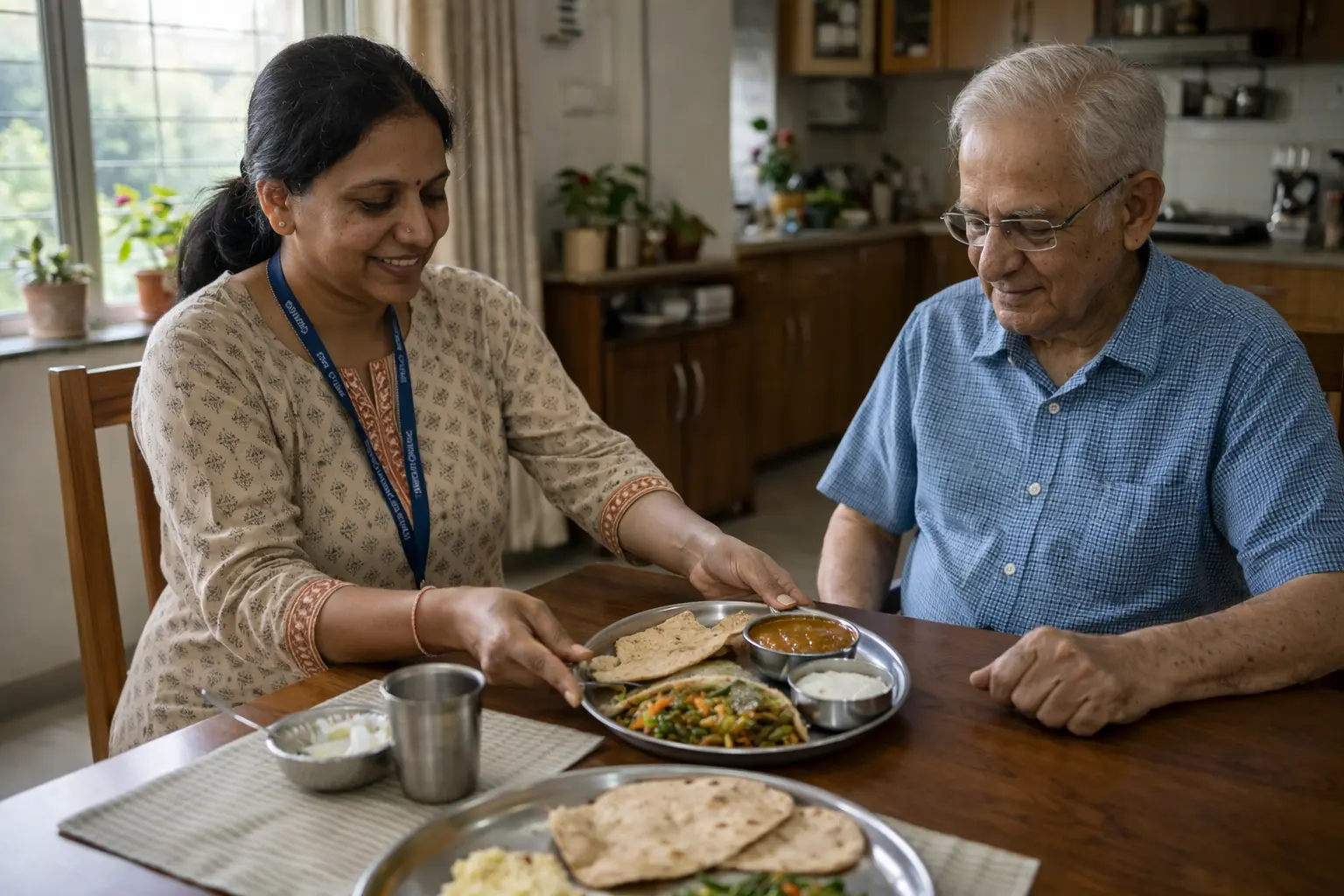
Food is medicine for elderly people, but only when it is the right food served in the right way at the right time. Most families caring for an elderly parent at home already know that nutrition matters. The real challenge is knowing what to actually cook and serve every single day in a way that meets the specific nutritional needs of an aging body without turning every meal into a complicated production.At Pranyaas, senior nutrition at home is one of the areas where we see the biggest gap between what families intend to provide and what elderly parents actually receive day to day. This guide gives you a complete, practical 7-day meal plan for elderly people built around Indian foods, realistic kitchen routines, and the nutritional requirements that matter most for aging adults living at home.
Why Elderly People Need a Different Approach to Daily Nutrition
The nutritional needs of a 70-year-old are genuinely different from those of a 40-year-old, and treating them the same is one of the most common nutrition mistakes families make in elderly home care.As people age, caloric needs decrease because metabolic rate slows and physical activity often reduces. But the need for specific nutrients, particularly protein, calcium, vitamin D, vitamin B12, and iron, either stays the same or increases. This means elderly people need to extract more nutritional value from fewer calories, which is only possible through deliberate and informed food choices rather than simply serving smaller portions of whatever the rest of the family is eating.According to the Indian Council of Medical Research, elderly Indians require approximately 1800 to 2000 calories per day if moderately active, with protein needs sitting at around 0.8 to 1 gram per kilogram of body weight daily. Many elderly people at home fall significantly below this protein target, which accelerates the muscle loss, fatigue, and weakness that families often mistake for inevitable aging.Beyond macronutrients, digestive efficiency declines with age, meaning that even when elderly people eat nutritious food, they may absorb less of it than a younger person would. This makes food quality, preparation method, and meal timing all more important in a diet plan for senior citizens than they are at any earlier stage of life.
What Every Elderly Person’s Daily Diet Should Include
Before presenting the weekly meal plan, understanding the nutritional priorities that shape it helps caregivers make better decisions when they need to substitute ingredients or adjust for specific health conditions.Every daily diet plan for elderly people at home should consistently include:
Adequate protein from sources like dal, eggs, paneer, curd, fish, and chicken to support muscle preservation, wound healing, and immune function
Calcium and vitamin D from dairy products, ragi, sesame seeds, and safe sunlight exposure to maintain bone density and reduce fracture risk
Foods that boost immunity in elderly individuals, including turmeric, ginger, amla, citrus fruits, and green leafy vegetables rich in antioxidants and vitamin C
Fiber from vegetables, fruits, and whole grains to support digestive health and prevent constipation, which is extremely common in elderly people with limited physical activity
Soft foods for the elderly with chewing problems, as many seniors have dental issues that make hard or chewy foods painful and therefore avoided, leading to nutritional gaps
Consistent hydration through water, buttermilk, dal, soups, and coconut water, since elderly people frequently do not feel thirst even when dehydrated
The Complete 7 Day Meal Plan for Elderly People
This meal plan is designed for a generally healthy elderly person with no severe dietary restrictions. Modifications for diabetes, hypertension, and kidney disease are noted where relevant. All meals use commonly available Indian ingredients and preparation methods suitable for elderly digestion.
Day 1
Breakfast:
Soft idlis with sambar and a small bowl of curd. A glass of warm milk with a pinch of turmeric.
Mid-Morning:
One small banana or a handful of soaked almonds with a glass of water.
Lunch:
Soft-cooked rice with moong dal, a serving of lauki sabzi cooked soft, and a small portion of curd.
Evening Snack:
A cup of warm daliya or a small bowl of roasted makhana.
Dinner:
Two soft rotis with dal and lightly cooked spinach. A small bowl of curd.
Day 2
Breakfast:
Vegetable upma made soft with extra water, served with coconut chutney and a glass of warm milk.
Mid-Morning:
A small portion of papaya or one guava.
Lunch:
Khichdi made with rice and moong dal, served with a side of steamed carrots and a small bowl of curd.
Evening Snack:
A cup of warm soup, vegetable, or tomato, with a small piece of whole-grain toast.
Dinner:
Soft roti with rajma cooked until very soft, and a side of cucumber raita.
Day 3
Breakfast:
Two soft-boiled eggs with whole-grain toast and a glass of orange juice or a small piece of amla.
Mid-Morning:
A small bowl of curd with a teaspoon of honey or a few soaked raisins.
Lunch:
Brown rice or soft-cooked white rice with sambar, a portion of steamed fish if non-vegetarian, and a side salad of grated carrots.
Evening Snack:
Ragi porridge made with milk, lightly sweetened with jaggery.
Dinner:
Moong dal soup with soft rotis and a side of lightly sauteed methi leaves.
Day 4
Breakfast:
Soft poha made with peas and a small amount of peanuts, served with a glass of buttermilk.
Mid-Morning:
A small portion of watermelon or any seasonal soft fruit.
Lunch:
Dal rice with a portion of aloo gobhi cooked very soft and a small bowl of curd.
Evening Snack:
A cup of warm milk with a small serving of roasted chana.
Dinner:
Two soft rotis with paneer bhurji and a side of cucumber and tomato salad dressed with lemon juice.
Day 5
Breakfast:
Rava idli or soft rava dhokla with green chutney and a glass of warm milk with turmeric.
Mid-Morning:
A small banana or a few soaked dates.
Lunch:
Vegetable khichdi with a generous serving of ghee, a side of beet raita, and a small portion of papad if digestive health permits.
Evening Snack:
A cup of masala chai with two plain digestive biscuits or a small portion of makhana.
Dinner:
Moong dal with soft rotis and a side of lightly cooked palak, finished with a small bowl of curd.
Day 6
Breakfast:
Oats porridge made with milk and topped with sliced banana and a small amount of honey.
Mid-Morning:
A small portion of papaya or a glass of coconut water.
Lunch:
Rice with toor dal, a portion of soft-cooked lauki kofta if digestive health is good, and a side of curd rice.
Evening Snack:
Ragi ladoo or a small bowl of warm daliya with milk.
Dinner:
Two soft rotis with chicken curry cooked until very tender if non-vegetarian, or paneer curry for vegetarians, with a side of steamed broccoli or beans.
Day 7
Breakfast:
Soft idlis with coconut chutney and a glass of warm milk. A small piece of fresh fruit on the side.
Mid-Morning:
A small bowl of mixed soaked nuts, including almonds, walnuts, and raisins.
Lunch:
Lemon rice or curd rice with a side of soft-cooked mixed vegetables and a small portion of pickle if sodium intake permits.
Evening Snack:
A cup of warm tomato soup or a small serving of roasted makhana.
Dinner:
Moong dal khichdi with a generous serving of ghee, a side of steamed carrots, and a small bowl of curd.
Adjusting This Meal Plan for Common Health Conditions
The meal plan above works as a baseline for most elderly people, but many seniors at home are managing one or more chronic conditions that require specific dietary adjustments.For elderly people with diabetes, reduce simple carbohydrates like white rice and replace them with brown rice, millets, or smaller portions of rice paired with more dal and vegetables. Avoid fruit juices and sweetened beverages. Distribute carbohydrates evenly across all meals rather than concentrating them at lunch.For elderly people with hypertension, reduce sodium by limiting pickles, packaged foods, added salt in cooking, and papad. Increase potassium-rich foods like bananas, sweet potatoes, and dal, which support healthy blood pressure naturally. The meal plan above is already relatively low in sodium and can be adjusted further by simply reducing added salt.For elderly people with kidney disease, potassium and phosphorus restrictions may apply, which means limiting bananas, dairy in large amounts, and certain dal varieties. This requires direct guidance from the treating nephrologist, and Pranyaas recommends working with a qualified dietitian for any elderly parent with significant kidney impairment.Regular physical activity complements any dietary plan by improving how the body uses the nutrients it receives. Our guide on the Why Professional Elderly Care at Home Is Important for Aging Parents pairs directly with this meal plan to support muscle strength, energy levels, and overall daily health.
Hydration and Meal Timing for Elderly People at Home
Two practical aspects of elderly nutrition that the meal plan alone cannot fully capture are hydration and timing, both of which significantly affect how well the body uses the food being provided.Hydration tips for senior citizens at home center on one core challenge: elderly people often do not feel thirsty reliably. By the time an elderly person says they are thirsty, they are frequently already mildly dehydrated. Place water or a hydrating drink like buttermilk or coconut water visibly in front of your parent at every meal and encourage small sips throughout the day rather than large amounts at once. Aim for six to eight glasses of fluid daily across all sources, including water, dal, soups, and milk.Meal timing matters because elderly digestive systems work more slowly and less efficiently than younger ones. Spacing meals four to five hours apart, keeping dinner light and at least two hours before bedtime, and offering a small mid-morning and mid-afternoon snack rather than two very large meals supports better digestion, more stable blood sugar, and improved energy throughout the day.Medication timing often intersects with meal timing in ways that affect both. Some medications must be taken with food, others on an empty stomach, and some must be kept well separated from certain foods. Our detailed guide on how to give medicine to elderly parents at home without making mistakes covers how to coordinate medication and meal timing safely and without creating confusion in the daily routine.
Conclusion
A good meal plan for elderly people is not about complexity or restriction. It is about consistency, nutritional completeness, and food that is genuinely enjoyable and appropriate for an aging body. The 7-day plan in this guide gives families a practical starting point that covers all the major nutritional needs of elderly people at home using familiar Indian ingredients and simple preparation methods.At Pranyaas, we have seen how much a structured approach to daily nutrition changes the health and energy of elderly people at home. The improvement is not subtle. Better nutrition translates directly into better sleep, stronger legs, improved mood, fewer infections, and a greater willingness to engage with the movement and daily routines that keep elderly people healthy and independent for longer.Start with one week, observe how your parent responds, adjust for taste and tolerance, and build from there. Small, consistent improvements in daily nutrition compound into significant health gains over months and years of careful, loving attention.
Frequently Asked Questions (FAQs)
1. How many meals should an elderly person eat in a day?
Most elderly people do best with three moderate meals and two small snacks spread across the day rather than two or three large meals. This approach supports more stable blood sugar, reduces digestive discomfort, and makes it easier to meet daily nutritional targets without overwhelming an elder who has a naturally reduced appetite.
2. What foods should elderly people avoid at home?
Elderly people should generally avoid very salty foods like pickles, papad, and packaged snacks in large amounts, as these worsen blood pressure and fluid retention. Deep-fried foods are harder to digest and contribute to cardiovascular risk. Raw or undercooked proteins carry an infection risk for elderly immune systems. Very hard or sticky foods can create a choking risk for elders with swallowing difficulties. Sugar-sweetened beverages provide empty calories without nutritional value.
3. What are the best protein sources for elderly people who are vegetarians?
The best vegetarian protein sources for elderly people at home include dal in all varieties, paneer, curd, milk, eggs if lacto-ovo vegetarian, soya products, and ragi. Combining dal with rice at the same meal provides a complete amino acid profile, which is particularly important for elderly vegetarians who are not eating animal protein. A small amount of ghee added to dal and rice improves both palatability and the absorption of fat-soluble vitamins.
4. Is ghee good or bad for elderly people?
In moderate amounts, ghee is beneficial for elderly people. It provides fat-soluble vitamins A, D, E, and K, supports joint lubrication, improves the palatability and digestibility of meals, and provides a concentrated energy source for elderly people who struggle to meet caloric needs through volume of food alone. One to two teaspoons of ghee per day added to dal, rice, or roti is appropriate for most elderly people without severe cardiovascular disease. Elderly people with very high LDL cholesterol or active heart disease should follow their doctor’s specific guidance on ghee intake.
5. How do I get my elderly parent to eat more when they have no appetite?
Poor appetite in elderly people is extremely common and can have multiple causes, including medication side effects, depression, taste changes, dental discomfort, or simply reduced metabolic need. Strategies that help include serving smaller portions more frequently, warming food to enhance aroma, adding small amounts of ghee or mild spices to improve flavor, and eating together with your parent whenever possible, as social context significantly improves intake. If poor appetite persists for more than a week, speak with the doctor to rule out underlying medical causes.
6. Can this meal plan be followed by an elderly person with diabetes?
The core structure of this meal plan is appropriate for diabetic elderly people with modifications. Replace white rice with brown rice or millets, reduce portion sizes of all carbohydrate-containing foods, avoid added sugar, choose lower-glycemic fruits like guava, papaya, and berries over high-sugar options like mango and banana in large amounts, and ensure protein is present at every meal to slow glucose absorption. Blood sugar should be monitored regularly, and the meal plan reviewed with the treating doctor or dietitian.
7. How does nutrition support overall elderly care at home?
Good nutrition works as the foundation beneath every other aspect of elderly home care. It provides the energy needed for daily activity and exercise, supports the immune function that prevents infections, maintains the muscle mass that makes falls less likely, and supports the cognitive clarity that makes medication management and daily routines more reliable. Our complete guide on how to manage daily healthcare needs of an elderly parent at home explains how nutrition fits into the full picture of daily elderly care alongside exercise, medication, and health monitoring.






Leave A Comment