Managing the daily healthcare needs of an elderly parent at home is one of the most responsible and emotionally demanding roles a family member can take on. Whether your parent is recovering from a surgery, living with a chronic condition like diabetes or hypertension, or simply slowing down with age, having a structured daily care routine makes a significant difference in their quality of life. At Pranyaas, we work closely with hundreds of families across India who are navigating this exact journey, and we have seen firsthand how the right approach transforms both the elder’s health and the caregiver’s confidence.
This guide covers everything you need to know about elder care at home, from building a morning routine to managing medications, nutrition, exercise, and emergencies, all in one practical resource built from real caregiving experience.
Why Elderly Care at Home Is the Right Choice for Most Families
India is home to over 140 million senior citizens, and that number is growing rapidly. According to the United Nations Population Fund India report, by 2050, nearly 20 percent of India’s population will be aged 60 or above. Yet institutional care remains inaccessible or unaffordable for most families, leaving the responsibility for daily elderly care largely on family members at home.
Home healthcare for elderly parents is not just about physical well-being. It is about preserving dignity, independence, and emotional security in familiar surroundings. Research published by the World Health Organization consistently shows that elderly individuals who receive care at home within a family environment experience lower rates of depression, faster recovery from illness, and better long-term health outcomes compared to those placed in institutional settings.
The challenge, however, is that most family caregivers are not trained healthcare professionals. They are sons, daughters, and spouses doing their best with limited knowledge and even more limited time. That gap between love and expertise is exactly what Pranyaas was built to bridge.
What Daily Elderly Care at Home Actually Covers
Before building any routine, it helps to understand what daily care for an elderly parent actually involves. Many families focus only on medications and meals, missing critical areas like mental health, mobility, and preventive monitoring.
A complete at-home care plan for seniors should address six interconnected areas: medical management, nutrition, physical activity, mental and emotional health, safety and fall prevention, and social connection. When even one of these areas is neglected, it creates a ripple effect across the others. An elder who is not eating well will have lower energy for movement, which weakens muscles and increases fall risk, which then leads to further isolation and depression.
The families who manage this best are those who approach elderly care at home not as a series of disconnected tasks but as a system, one where each element supports the other consistently every single day.
How to Build a Daily Routine for Your Elderly Parent at Home
One of the most powerful tools in home healthcare for elderly parents is consistency. Older adults, particularly those with cognitive changes or chronic illness, thrive on predictable rhythms. A structured daily routine reduces anxiety, supports better sleep, improves medication adherence, and gives caregivers a clear framework to work within.
Here is how to build a practical daily care routine for elderly parents that covers all essential health needs throughout the day.
What to Do in the Morning
The morning hours are often when elderly individuals are most alert and responsive.
This makes it the ideal time for health checks, medications, and personal hygiene routines.
A strong morning routine for elder care at home typically begins between 7 and 8 AM.
Key steps that Pranyaas care coordinators recommend include:
- Begin with a gentle wake-up, avoiding sudden noise or rushing, as many elderly people experience morning stiffness and dizziness.
- Assist with or supervise bathroom use, which is among the highest-risk times for falls among older adults.
- Complete oral hygiene and personal grooming, supporting infection prevention and overall mood.
- Serve breakfast that is nutritious, appropriately textured, and paired with prescribed morning medications.
- Follow breakfast with five to ten minutes of light movement, such as stretching or a short indoor walk.
The National Institute on Aging recommends giving medications with food unless otherwise prescribed, as this reduces stomach irritation and improves absorption for the most common elderly medications. At Pranyaas, our care coordinators often tell families that a consistent morning routine does more for an elder’s overall health than any single medication. The predictability itself becomes therapeutic.
What to Focus on at Midday
By midday, the focus of the elderly home care routine shifts toward health monitoring and the most substantial meal of the day. This is the right time for caregivers to check vital signs if recommended by the doctor, including blood pressure, blood sugar levels for diabetic parents, and oxygen saturation for those with any respiratory condition.
Midday is also when most elders benefit from a short rest of 20 to 30 minutes, though long afternoon naps should be discouraged as they disrupt nighttime sleep. Hydration is critically important during these hours. Many elderly people do not feel thirst the way younger adults do, making them vulnerable to chronic dehydration, which worsens kidney function, confuses, and increases fall risk considerably. Placing a visible water bottle near where your parent sits and gently reminding them to drink every hour is one of the simplest yet most impactful habits a caregiver can build.
What to Do in the Evening Before Bed
Evening is naturally a time for lighter activity and meaningful social engagement. For many elderly people, this is also when mood dips, a phenomenon sometimes called sundowning in those with early cognitive changes. Keeping your parent engaged during the late afternoon with conversation, a balcony walk, light music, or a favourite television program can significantly stabilize their emotional state through the evening hours.
Key elements of a well-structured evening routine in elder care at home include:
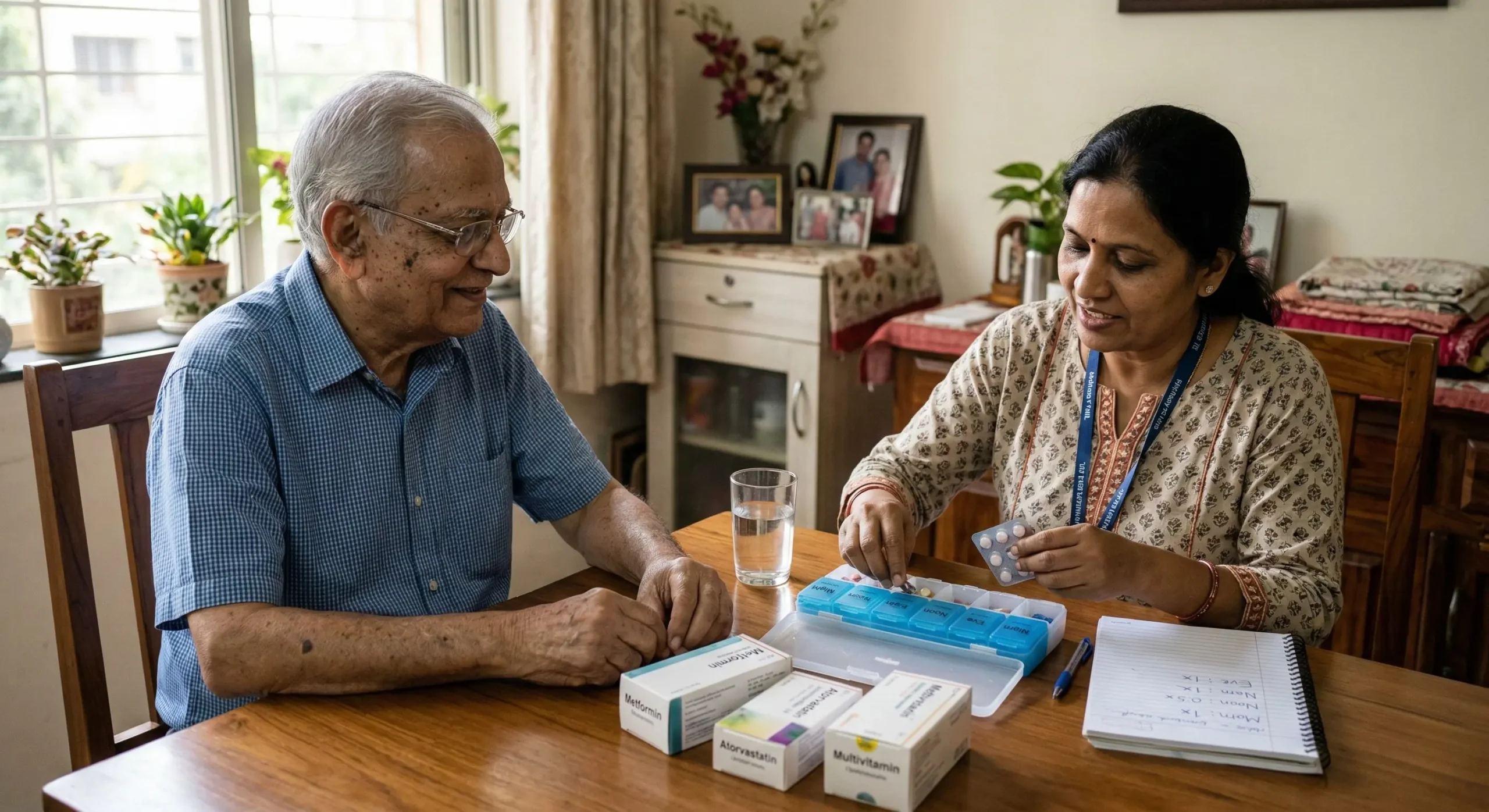
- Administering evening medications at a consistent time each day using a clearly labelled pill organizer
- Serving dinner that is light, easy to digest, and eaten at least two hours before bedtime to support sleep quality and reduce acid reflux
- Completing evening hygiene and preparation for sleep, including ensuring nighttime medications and water are within easy reach
- Placing a nightlight along the path between the bedroom and bathroom to prevent falls during nighttime bathroom visits
Pranyaas care managers frequently emphasize one rule above all others for evening medication routines: never adjust a dose or stop a medication without speaking to the doctor first, even if your parent feels better or complains of side effects. This single mistake accounts for a significant proportion of preventable hospital readmissions among elderly patients in India.
How to Track Your Elderly Parent’s Health at Home Every Day
Knowing how to monitor elderly health at home daily is one of the most critical skills a family caregiver can develop. Early detection of changes in an elder’s condition can prevent minor issues from becoming serious medical emergencies that require hospitalization.
Effective senior health monitoring at home involves both physical measurements and behavioral observation. The two work together. Physical readings give you numbers, but behavioral changes often tell the fuller story.
Physical monitoring includes:
- Tracking blood pressure readings daily and comparing them to the baseline values established by the doctor at previous clinic visits
- Monitoring blood sugar before meals and sometimes before bed for seniors with diabetes, logging all readings in a dedicated notebook kept near the medication area
- Weighing your parent weekly at the same time of day, as sudden weight loss or gain can indicate issues ranging from poor nutrition to developing heart failure
- Checking skin condition regularly, particularly over bony prominences, for early signs of pressure sores in elders with limited mobility
Behavioral monitoring is equally important and often more revealing than numbers alone:
- Sudden confusion or disorientation in an elder who is normally clear-headed can signal a urinary tract infection, medication side effects, or dangerously low blood sugar
- A change in appetite, unusual fatigue, or increased irritability that lasts more than a day or two deserves prompt medical attention
- Difficulty with tasks your parent previously managed independently, such as buttoning clothing or following a conversation, may signal neurological changes worth discussing with a doctor
According to guidance from Johns Hopkins Medicine, consistent home monitoring of chronic conditions reduces emergency hospitalizations among elderly patients by a meaningful margin when paired with regular physician follow-ups. A simple health tracking notebook kept near your parents’ medication area works well for daily logging, and several families using Pranyaas’s home care support have found that this log becomes invaluable during doctor visits.
How to Manage Medications Safely Every Day
For most elderly people living at home, managing multiple medications is the single most error-prone part of daily care. Many seniors take five or more medications daily, a condition known as polypharmacy, and the risk of missed doses, double doses, or dangerous drug interactions is real and serious enough to cause hospitalization.
Since medication errors at home are far more common than most families realize, Pranyaas has put together a dedicated resource that goes deep into this specific challenge. If your parent takes multiple medications or has recently had prescriptions changed, reading our detailed guide on how to give medicine to elderly parents at home without making mistakes will walk you through the exact systems and safeguards that prevent the most common errors in home elderly care.
For daily management, a clear system built on these core principles makes a significant difference:
- Create a complete medication list that includes every drug, supplement, and herbal remedy your parent takes, along with dosages, timing, and the reason each is prescribed
- Use a weekly pill organizer divided by day and time, such as morning, afternoon, evening, and night, so it is always visually clear whether a dose has been taken
- Set phone alarms or use a medication reminder app to reinforce consistent timing across all doses throughout the day
- For elders with any degree of memory difficulty, a caregiver should directly administer and confirm each medication rather than leaving the elder to self-manage
- Store all medications in a single designated location that is cool, dry, and accessible to the caregiver but safely out of reach of any children in the household
What to Feed Your Elderly Parent: A Simple Daily Nutrition Guide
Nutrition is the foundation of elderly health, yet it remains one of the most underestimated aspects of home healthcare for elderly parents. As people age, their caloric needs decrease, but their requirements for specific nutrients like protein, calcium, vitamin D, and vitamin B12 actually increase. This creates a nutritional gap that requires deliberate and informed daily planning.
A well-designed diet plan for seniors at home is not about restricting food. It is about ensuring that every meal delivers maximum nutritional value in portions and textures appropriate for the elder’s specific condition. For practical daily meal planning built around Indian ingredients and senior nutritional needs, our detailed 7-day meal plan for elderly people including a complete diet plan for seniors, provides week-by-week guidance across different health conditions, including diabetes, hypertension, and digestive issues.
The general nutritional principles that every elderly home care routine should incorporate include:
- Prioritizing protein at every meal through options like dal, eggs, paneer, fish, and curd, as muscle mass preservation is critical for mobility and fall prevention in older adults
- Including calcium-rich foods like ragi, sesame seeds, dairy products, and dark leafy greens to support bone density and reduce fracture risk over time
- Limiting sodium to protect blood pressure and heart health, which means reducing packaged foods, pickles, and added salt in daily cooking
- Keeping fiber intake adequate through vegetables, fruits, and whole grains to maintain digestive health and prevent constipation, which is extremely common in elderly individuals with limited mobility
- Actively encouraging hydration throughout the day with water, coconut water, dal, soups, and buttermilk, since elderly individuals frequently do not feel thirsty even when clinically dehydrated
The Indian Council of Medical Research dietary guidelines for elderly Indians recommend a daily caloric intake of approximately 1800 to 2000 calories for moderately active seniors, with protein forming at least 15 to 20 percent of total daily intake.
Simple Daily Exercises for Elderly Parents Who Stay at Home
Physical inactivity is one of the fastest routes to declining health in older adults. Even in elders with limited mobility, gentle daily movement preserves muscle strength, improves circulation, supports digestion, and significantly reduces the risk of falls. The families we work with at Pranyaas often express concern that encouraging their elderly parents to exercise might be risky, but research consistently shows that the health risks of inactivity are far greater than the risks of appropriate, gentle movement done regularly.
For families who want a complete and condition-specific movement plan, our guide on the Why Professional Elderly Care at Home Is Important for Aging Parents covers safe, effective movements that can be done entirely within the home, with clear modifications for varying levels of mobility and health conditions, including arthritis, post-surgery recovery, and balance problems.
For the daily elderly home care routine, the following exercises offer a safe and effective starting
point for most elderly individuals without significant physical restrictions:
- Ankle circles and calf raises are done while seated, which improve lower limb circulation and help prevent blood clots, particularly important for elders who sit for long periods each day
- Shoulder rolls and gentle neck stretches should be done slowly and carefully to reduce upper body stiffness and improve posture over time
- Standing wall push-ups, where the elder faces a wall and pushes gently against it with both palms, building arm and shoulder strength without placing stress on joints
- Seated marching, where the elder lifts alternate knees while seated in a firm chair, which engages the core and hip flexors without requiring standing balance
- Gentle indoor walking for ten minutes twice daily, which delivers measurable cardiovascular and musculoskeletal benefits even at a very slow pace
For elders recovering from surgery or living with conditions like Parkinson’s disease, arthritis, or osteoporosis, Pranyaas always recommends working with a qualified physiotherapist before beginning any new exercise routine at home.
How to Make Your Home Safer for an Elderly Parent
Falls are the leading cause of injury-related hospitalization among elderly people in India. According to the Indian Journal of Orthopaedics, approximately 40 percent of elderly adults experience at least one fall per year, and a significant number of these result in fractures, head injuries, or permanent mobility loss that changes an elder’s independence entirely.
Making the home environment safer for your elderly parent is not a one-time task. It is an ongoing process that should be reviewed every few months as your parents’ mobility and health status change with age and illness.
Key home safety steps for elder care at home include:
- Installing grab bars near the toilet and inside the shower or bathtub, as the bathroom is statistically the most dangerous room in the home for elderly people
- Using non-slip mats both inside the shower and on the bathroom floor outside it to prevent slipping on wet surfaces
- Ensuring the path between the bedroom and bathroom is clear of obstacles and adequately lit at all times, particularly during the night
- Setting bed height so your parent can sit on the edge with feet flat on the floor, making it easier and safer to stand without losing balance
- Removing loose rugs, electrical cords, and any other trip hazards from all walking areas throughout the home
- Keeping walking aids like canes or walkers always within reach when your parent is seated or resting, so they are never tempted to walk without support
- Choosing closed-toe slippers with non-slip soles for daily indoor use, as bare feet or open sandals on smooth flooring, increases fall risk significantly
What to Do When a Health Emergency Happens at Home
Even with the best daily care routine in place, health emergencies can and do happen. Knowing how to recognize warning signs early and what to do in the first critical minutes can mean the difference between a manageable situation and a life-threatening outcome.
The most common health emergencies in elderly people at home include sudden chest pain, breathing difficulty, severe dizziness or loss of balance, signs of stroke such as facial drooping or sudden slurred speech, hypoglycemic episodes in diabetic elders, and falls that result in injury. Since emergency preparedness deserves its own detailed and step-by-step attention, our complete guide on how to handle common health emergencies of elderly people at home walks through each of these scenarios with clear instructions on what to do immediately, what to tell emergency services, and how to prepare your home in advance to handle crises more safely.
For immediate daily preparedness, every caregiver should keep the following accessible at all times:
- A written list of all emergency contacts, including the doctor, nearest hospital, and ambulance service, should be posted visibly somewhere in the home
- A current medication list and medical history summary in a designated place that emergency responders can locate quickly when needed
- A basic first aid kit stocked with bandages, antiseptics, a thermometer, a blood pressure monitor, and a pulse oximeter
- Clear knowledge of the nearest hospital with an emergency department and the fastest route to reach it from your home
How to Support Your Elderly Parent’s Mental and Emotional Health
Physical health and emotional health are inseparable in elderly care at home, yet mental and emotional well-being is the area most frequently overlooked by family caregivers. Depression affects approximately 30 to 40 percent of elderly individuals globally, according to the World Health Organization, and in India, the stigma around mental health makes it even more likely to go unrecognized and untreated within family settings.
Warning signs of emotional distress in elderly parents that every caregiver should watch for include:
- Withdrawal from activities and hobbies they previously enjoyed and looked forward to
- Significant changes in sleep patterns, either sleeping far more than usual or experiencing persistent insomnia night after night
- Loss of appetite or marked disinterest in food over several consecutive days without a physical explanation
- Frequent expressions of hopelessness, worthlessness, or feeling like a burden to the family
- Increased irritability or emotional volatility that is noticeably different from their normal temperament
Daily practices that support emotional well-being in elderly home care include maintaining regular social connections through phone or video calls with friends and extended family, encouraging hobbies and creative activities that give a sense of purpose and accomplishment, and engaging in reminiscence activities like looking through old photographs or sharing family stories. Research has consistently shown that reminiscence activities reduce anxiety and improve mood, particularly in elderly individuals with mild cognitive changes, making them a valuable and easy-to-implement daily tool.
At Pranyaas, our companion care services are built around this understanding. Physical care delivered without emotional engagement is incomplete care, regardless of how technically thorough it may be in every other respect.
Taking Care of Yourself as a Caregiver
No guide to caring for aging parents at home is complete without directly addressing the person providing that care. Caregiver burnout is a recognized medical and psychological condition that affects a large proportion of family caregivers, particularly those providing care without adequate support or regular breaks from their responsibilities.
Burnout presents as persistent exhaustion, growing resentment toward the caregiving role, emotional numbness, neglect of personal health needs, and a creeping sense of hopelessness about the situation. It does not mean you do not love your parents. It means you are human, and that you have been carrying a weight too heavy to carry indefinitely without support.
Practical steps that help caregivers maintain their own well-being while managing daily elderly care at home include:
- Setting clear and protected time for personal rest, meals, and social connection outside of caregiving responsibilities
- Accepting help when it is offered, and actively seeking it when it is not, whether from family members, friends, or professional care services
- Exploring respite care options that provide regular and planned breaks from caregiving through trusted and qualified support
- Staying connected with your own doctor and refusing to defer personal health needs indefinitely in favor of caregiving demands
- Connecting with other caregivers through support groups, either in person or online, where shared experience provides both practical advice and genuine emotional relief
A caregiver who is rested, healthy, and emotionally supported provides measurably better care. Investing in your own well-being is not selfishness. It is the most practical and loving thing you can do for your elderly parent every single day.
When You Need Professional Home Care Support
Knowing when the needs of your elderly parent have exceeded what family home management alone can safely address is an important part of responsible caregiving. There are clear and recognizable signals that professional home healthcare support is needed, and recognizing them early leads to better outcomes for everyone involved.
The following table summarizes the most common situations where professional elderly home care becomes necessary, along with the specific reasons professional support helps in each case.
| Situation |
Why Professional Support Is Needed |
| Recent hospital discharge |
Requires skilled nursing, wound care, or physiotherapy at home |
| Complex chronic disease management |
Consistent monitoring and care beyond typical family capacity |
| Significant mobility decline |
Trained assistance needed for safe transfers and bathing |
| Caregiver burnout |
Quality of daily care begins to be compromised by exhaustion |
| Cognitive decline or dementia progression |
Requires specialized behavioral support and safety management |
| Post-surgical recovery at home |
Needs medical-grade care and structured rehabilitation |
Professional home healthcare for elderly parents, like the services provided by Pranyaas, does not replace family care. It complements it, filling the skilled and time-intensive gaps so that family caregivers can focus on being emotionally present rather than physically overwhelmed.
Conclusion
Managing the daily healthcare needs of an elderly parent at home is not a single task or a fixed checklist you complete and move on from. It is a living, evolving commitment that touches every aspect of your parents’ physical, emotional, and social well-being. The families who do it best are not those who do everything perfectly from the very beginning. They are the ones who stay informed, build consistent routines, ask for help when they need it, and show up every day with both structure and genuine love.
A complete elder care at home system covering medication management, nutrition, daily health monitoring, safe exercise, fall prevention, and emotional well-being does not take shape overnight. It is built gradually, one routine, one conversation, and one small improvement at a time. The fact that you are reading this guide means you are already taking it seriously, and that matters more than most caregivers realize.
At Pranyaas, we believe that every elderly parent deserves dignified, expert care within the warmth of their own home, and that every family caregiver deserves real and consistent support in delivering it. Whether you are just beginning to navigate home healthcare for elderly parents or you are an experienced caregiver looking to strengthen your current approach, we are here to support you at every step of this journey.
Frequently Asked Questions (FAQs)
1. What is the most important part of a daily care routine for elderly parents at home?
The most important element of any daily elderly care routine is consistency. A predictable schedule for medications, meals, monitoring, and activity helps elderly individuals feel secure, reduces anxiety, and improves health outcomes across every area of daily life. Consistency also makes it significantly easier for caregivers to spot deviations that might signal a developing health problem before it becomes serious.
2. How do I monitor my elderly parent’s health at home without medical training?
You can effectively monitor elderly health at home by tracking a few key indicators daily, including blood pressure, blood sugar for diabetic parents, body weight weekly, appetite, sleep quality, and mood. Keep a simple log of all readings and share it with your parents’ doctor at each visit. Pay close attention to behavioral changes as well, since sudden confusion, unusual fatigue, or personality shifts are often the earliest signs of a health issue developing.
3. How many medications are too many for an elderly parent, and how do I manage them safely?
Polypharmacy, defined as taking five or more medications simultaneously, is common in elderly individuals and carries real risks of drug interactions and side effects. Managing medications safely at home requires a complete and current medication list, a weekly pill organizer, consistent timing, and regular medication reviews with the prescribing doctor.
4. What should an ideal diet plan for elderly parents at home look like?
An ideal diet plan for elderly parents should be high in protein to preserve muscle mass, rich in calcium and vitamin D for bone health, moderate in complex carbohydrates, low in sodium, and abundant in vegetables and fruits for fiber and micronutrients. Meals should be served in smaller portions more frequently throughout the day, with textures adapted to any chewing or swallowing difficulties your parent experiences. For a complete week of meal plans built for Indian seniors across different health conditions.
5. How do I prevent my elderly parent from falling at home?
Fall prevention requires both environmental modifications and physical conditioning working together consistently. Remove loose rugs, improve nighttime lighting, install bathroom grab bars, ensure appropriate non-slip footwear is worn at all times indoors, and keep walking aids always accessible. Equally important is maintaining leg strength and balance through gentle daily exercise.
6. What are the signs of caregiver burnout, and what should I do about it?
Signs of caregiver burnout include chronic exhaustion, emotional withdrawal, growing resentment toward the caregiving role, neglect of personal health, and feeling persistently trapped or hopeless about the situation. If you recognize these signs in yourself, seek support immediately. Talk to a trusted friend, family member, or mental health professional. Explore respite care options and consider reaching out to professional care services like Pranyaas to provide structured and reliable relief.
7. When should I consider professional home healthcare support for my elderly parent?
Consider professional home healthcare for elderly parents when post-hospitalization recovery requires skilled nursing or physiotherapy, when chronic disease management has become complex or inconsistent, when your parent’s mobility requires trained transfer and bathing assistance, or when caregiver exhaustion is beginning to compromise the quality of daily care being provided.






Leave A Comment