

Our Blog Details

  • Post By
  • Date
    October 12, 2026
  • Comments
    0
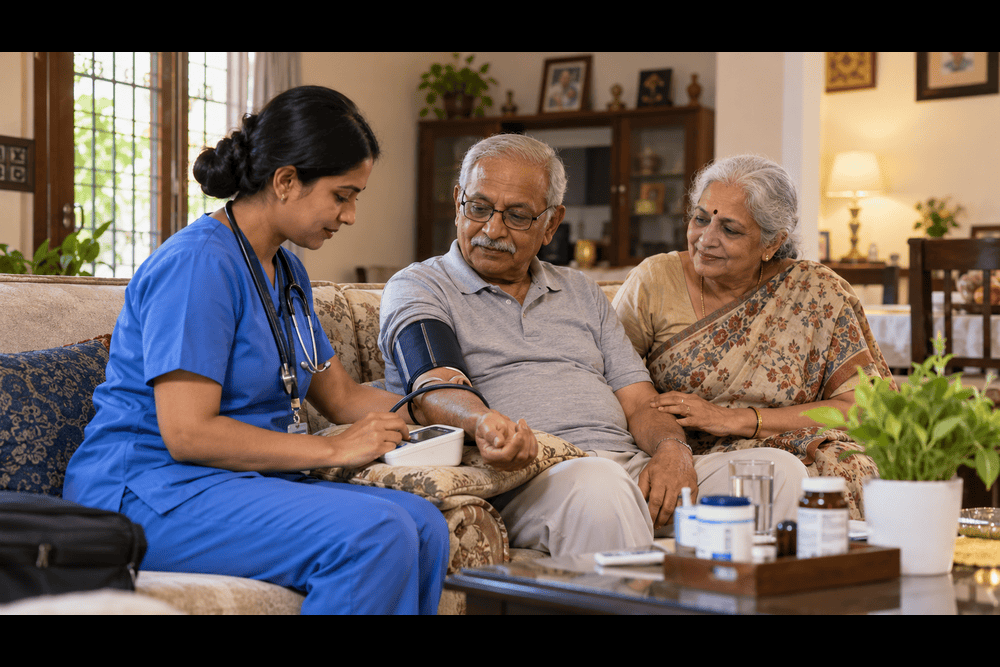
Regular health monitoring helps senior citizens and their families notice changes early, understand whether treatment is working, and give doctors accurate information between visits. It does not prevent illness on its own or replace medical examinations, but a consistent routine guided by the treating doctor makes it easier to act on warning signs before small problems become harder to manage.   For many families, monitoring sounds like gadgets and daily readings. In practice, the most valuable monitoring is often simpler: a doctor who reviews your parent at sensible intervals, a few home measurements the doctor has asked for, and someone who notices when your parent is not quite themselves. This article explains why that combination matters, and how to keep it useful without letting it become a source of worry.

What does health monitoring mean for older adults?

Health monitoring for senior citizens is the regular, planned observation of health so that changes can be recognised and discussed with a doctor. It usually works on three levels.  
  1. Clinical review by a doctor. Periodic consultations, examinations, and tests, at a frequency the treating doctor decides based on your parent’s condition.
  2. Home measurements the doctor has advised. For example, blood pressure for someone on blood pressure medicines, or blood sugar for someone with diabetes. What to measure and how often should come from the doctor.
  3. Everyday observation of functioning. Appetite, sleep, mood, memory, walking, continence, and how well daily tasks are managed.
  The World Health Organization’s approach to integrated care for older people focuses on what it calls intrinsic capacity, meaning a person’s physical and mental abilities, such as mobility, memory, mood, vision, hearing and nutrition. Its guidance for primary care describes checking for declines in these abilities and building a personalised care plan around them. The point for families is that monitoring is not only about numbers. A parent who has started walking more slowly or forgetting conversations is giving you information that matters just as much as a blood pressure reading.

Why does monitoring matter more with age?

Older adults often live with several conditions at once

The WHO notes that common conditions in older age include hearing loss, cataracts, back and neck pain, osteoarthritis, chronic obstructive pulmonary disease, diabetes, depression and dementia, and that people are more likely to experience several of these at the same time. When several conditions and medicines interact, a change in one can affect the others. Regular review helps doctors keep the overall picture balanced.

Some health problems show up in unusual ways

Older age is also associated with what doctors call geriatric syndromes, complex health states such as frailty, falls, delirium (a sudden state of confusion), incontinence, and pressure ulcers. These often have several underlying causes. An infection, for example, may show up in an older person as new confusion or a fall rather than an obvious fever. Families who know their parent’s usual state are better placed to notice when something is different.

Treatment needs adjusting over time

Medicines that suited your parent five years ago may need review as weight, kidney function or other conditions change. Monitoring gives the doctor evidence on whether a treatment is working and whether it is causing side effects.

Small changes are easier to act on early

A gradual loss of appetite, a slow rise in home blood pressure readings or more frequent dizziness are easier to investigate early than after they have led to a fall or hospital admission. Monitoring does not guarantee that problems will be caught, but it improves the chances.

What should be monitored, and who decides?

The most important rule in health monitoring for older adults is that the treating doctor decides what is measured, how often, and what target ranges apply. Targets for blood pressure or blood sugar can differ from person to person, and a reading that is acceptable for one older adult may need action for another.  
What to monitor Why it can matter Who should set the plan
Readings the doctor has advised, such as blood pressure, blood sugar or weight Shows whether treatment is working between visits Treating doctor sets frequency and targets
New or changing symptoms, such as breathlessness, pain, dizziness or swelling May signal a change that needs review Family notes them; doctor assesses
Appetite, fluid intake and weight change Unplanned weight loss or poor intake can affect strength and recovery Doctor advises if and how often to weigh
Sleep, mood and memory Changes can reflect illness, medicine effects or low mood Family observes; doctor assesses
Walking, balance and falls or near falls Linked to injury risk and independence Family observes; doctor or physiotherapist assesses
Medicines taken and side effects Missed doses and side effects are common reasons treatment does not work Prescribing doctor reviews
Scheduled check-ups, eye, dental and hearing reviews Keeps routine care from slipping Family tracks; doctors advise frequency

Clinician-recommended measurements

If the doctor has asked for home readings, use a reliable device, take readings at the times advised, and record them as they are, without rounding. Ask the doctor or a nurse to check your parent’s technique once, because incorrect cuff size or position can change blood pressure results.

Symptoms and daily functioning

Keep a short note of anything new or unusual: “Did not finish lunch three days this week”, “Needed help getting up from the sofa”, “Asked the same question several times this evening”. These observations are often what helps a doctor link symptoms together.

Medicines and side effects

Note any missed doses, new medicines from another doctor, and possible side effects such as drowsiness, dizziness or stomach upset. Never stop or change a medicine because of a reading or a side effect without speaking to the prescribing doctor first.

How can families keep useful health records?

Monitoring only helps if the information can be found and understood later. A simple, consistent system is better than a complicated one.  
  • One current medicine list with each medicine’s name, dose, timing, reason, and prescribing doctor. Update it every time something changes.
  • A readings log in a notebook or spreadsheet, with date, time, and reading, plus a notes column for symptoms.
  • A reports folder, physical or digital, holding prescriptions, test results, discharge summaries and scan reports in date order.
  • A one-page summary listing conditions, allergies, doctors’ contact details and emergency contacts, kept where family and any caregiver can find it.
  Digital options can help families who coordinate from a distance. Under the Ayushman Bharat Digital Mission, people in India can create an Ayushman Bharat Health Account (ABHA) and use a personal health record app to link, store and share health records with consent. Whether you use a government app, a shared drive or a paper file, the goal is the same: anyone involved in your parent’s care should be able to see the latest information quickly.

How should families share monitoring information with doctors?

Doctors find trends more useful than single numbers. Before a consultation, summarise the period since the last visit: the range of readings, any symptoms, falls, missed medicines and questions. Bring the log and the medicine list. Our guide on how families can manage medical appointments for elderly parents includes a full checklist for preparing these visits.   Between visits, ask the doctor in advance which readings or symptoms should prompt a call, and write that guidance down. This avoids two common problems: calling the doctor about every small variation, and waiting for the next appointment when something genuinely needs earlier attention.

Which changes need prompt medical attention?

Some changes should not wait for the next routine appointment. Seek urgent medical help, for example by calling 112, if your parent shows warning signs such as:  
  • chest pain or pressure, or difficulty breathing
  • sudden weakness, numbness, difficulty speaking, or a drooping face
  • sudden confusion, unusual drowsiness or difficulty waking
  • fainting or loss of consciousness
  • a fall with a head injury, severe pain, or inability to get up
  • bleeding that will not stop, or vomiting blood
  Other changes need a prompt but non-emergency conversation with the doctor, such as readings repeatedly outside the range the doctor set, steady weight loss, new swelling in the legs, or a noticeable decline in walking or memory over days or weeks. If these changes are making it harder to manage at home, read about when elderly parents need professional healthcare assistance at home.

Can there be too much health monitoring?

Yes. More monitoring is not always better care.  
  • Anxiety for the older adult. Frequent checks can make a parent feel unwell or distrusted, especially if every reading becomes a family discussion.
  • Anxiety for the family. Single high or low readings happen for many reasons. Reacting to each one can lead to stress and unnecessary hospital visits.
  • Unreliable data. Consumer devices vary in accuracy. A worrying reading from a wearable should be checked properly, not acted on alone.
  • Loss of autonomy. Your parent has the right to decide how much monitoring they are comfortable with, as long as they understand the doctor’s advice.
  Ask the doctor directly: “What is the minimum we need to track, and how often?” A focused plan your parent agrees with is more useful than an exhaustive one nobody follows.

What role do family caregivers and professional support play?

Family members who live with or near a parent are often the best observers, because they know what normal looks like. Their role is to notice, record, and report, not to interpret results or adjust treatment. When children live in another city or abroad, monitoring becomes harder. Phone calls rarely reveal that a parent has stopped eating properly or is walking with difficulty. In these situations, regular in-person check-ins by a trained person can fill the gap. If you also want to make the home itself safer, the existing guide on how to ensure safety and health monitoring for seniors at home covers home safety measures.   Professional health care assistance for seniors can provide structure. According to the Pranyaas service page, its Care Managers document each parent’s prescriptions, medical history, allergies, and current doctors when care begins, keep records in one shared digital folder, and send families vitals and doctor advice after accompanied visits. The Essential plan includes a monthly vitals check, and fuller medical and nursing support is included from the Standard plan.

Frequently asked questions

How often should senior citizens have a health check-up?

There is no single schedule that suits everyone. The right frequency depends on your parent’s conditions, medicines and recent health. Someone with stable conditions may be reviewed every few months, while someone recently discharged from hospital may need closer follow-up. Ask the treating doctor to set a review schedule and write it down so the family can track it.  

Can home monitoring replace regular doctor visits?

No. Home readings and observations give doctors useful information between visits, but they cannot replace a clinical examination, tests, or a doctor’s judgement. Some problems can only be found through examination or investigations. Treat home monitoring as a way to make each consultation more informed, not as a substitute for it.  

What is a baseline, and why does it matter?

A baseline is your parent’s usual state when they are well: their typical readings, appetite, sleep, walking and alertness. Knowing it helps you notice meaningful change. A slight dip in appetite may be normal for one person and a warning sign for another. Writing down a short baseline now makes future changes easier to describe to a doctor.  

Should elderly parents use smartwatches or health wearables?

Some families find them helpful, but wearable readings are not always accurate enough for medical decisions. If you use one, discuss the readings with the doctor before relying on them, and confirm any concerning reading with an appropriate device or a clinical check. A wearable cannot replace someone who knows your parent noticing that they seem unwell.  

What should we do if a home reading is outside the usual range?

Stay calm and recheck after a few minutes, following the doctor’s advised technique. Note any symptoms. If your parent feels well, record the reading and follow the guidance the doctor gave for out-of-range results. If you notice warning signs such as chest pain, breathlessness, or sudden confusion, seek urgent medical help immediately.

Conclusion

Regular health monitoring matters for senior citizens because it turns scattered moments into a picture a doctor can use. Its value comes from consistency and communication: a plan set by the treating doctor, a few well-recorded measurements, close attention to everyday functioning and clear guidance on when to act. It cannot prevent every illness, and it should never replace medical examination, but it helps families respond earlier and with better information.   If you are coordinating your parents’ health from a distance and need someone to keep that picture complete, explore how professional healthcare support at home could work for your family.
Popular Tags :

Leave A Comment

Need Any Helps ?

Get More Consultations