

24/7
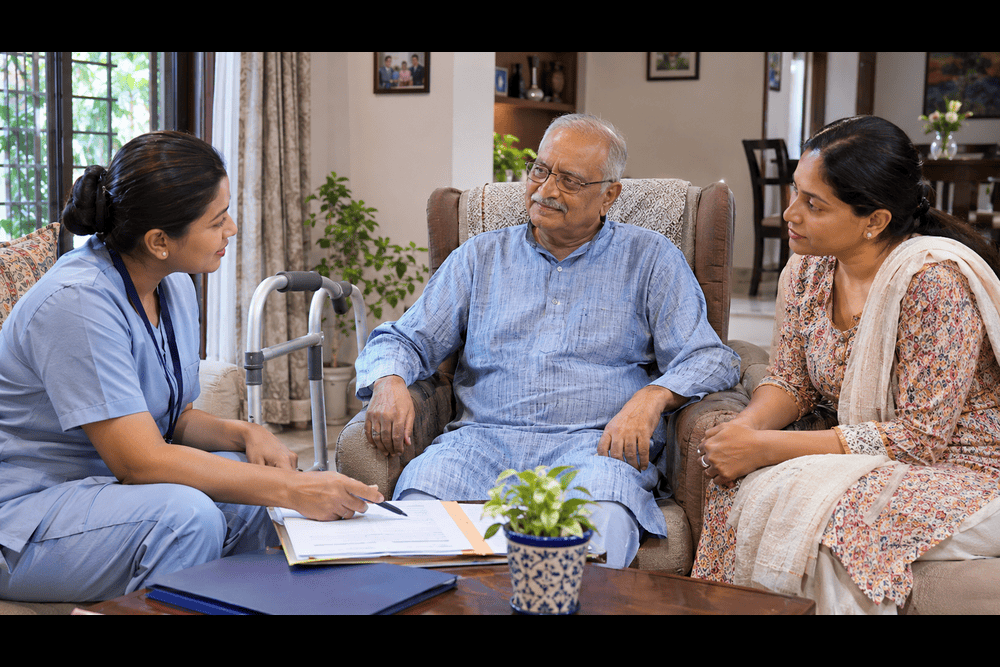

To arrange home care after a parent’s hospital discharge, start before the discharge date. Collect the discharge summary and written instructions, confirm what nursing, attendant support, and equipment the doctor advises, prepare the home, name one family coordinator, book follow-up visits, and agree how everyone will stay updated.
The first days at home often bring new medicines, reduced strength and many instructions at once. If you are still deciding whether your parent’s condition suits home care at all, read how home healthcare and hospital care differ for seniors first, and always follow the treating doctor’s advice.
Arrange information, people, equipment, and the home while your parent is still admitted, so you can ask the team that treated them.
Ask questions that turn general advice into specific instructions you can follow at home. Useful questions include:
MedlinePlus, the health information service of the US National Library of Medicine, describes a discharge plan that covers medical problems and allergies, diet and activity limits, equipment and follow-up care. Ask for these points in writing. If your parent wants a son or daughter to receive updates directly, tell the team, as hospitals may need the patient’s consent.
Collect every paper that explains what happened in the hospital and what comes next, keeping originals and scanned copies.
| Document | Why it matters |
|---|---|
| Discharge summary | Records the diagnosis, treatment and procedures for every doctor your parent sees next |
| Prescription and medicine chart | Shows new, changed and stopped medicines with timings |
| Written care instructions | Covers wound care, diet, activity and any nursing tasks |
| Test reports and scans | Give the follow up doctor a starting point for comparison |
| Follow up details | Date, doctor and any tests needed beforehand |
| Final bill and receipts | Needed for insurance claims and household records |
| Insurance letters, if any | Authorisation and claim papers from the insurer or TPA |
Match medical and nursing support at home to what the doctor has prescribed. Ask which tasks need a qualified professional and which an attendant or trained family member can manage.
A qualified nurse is needed for clinical tasks the doctor prescribes, such as injections, wound dressing, or catheter and feeding tube care. Ask how long nursing is expected to continue and confirm the nurse’s qualifications before the first visit.
An attendant helps with bathing, toileting, moving safely, meals and reminders. Decide how many hours your parent needs: a few hours a day, a day shift, or someone present round the clock, especially at night.
Arrange physiotherapy only if the treating team advises it, and share the discharge summary with the physiotherapist.
Common items include a hospital bed, wheelchair, walker, commode chair or shower chair. Arrange oxygen or other medical equipment only when the doctor prescribes it, and make sure someone is shown how to use it safely.
Name one coordinator and write down who handles each remaining task, so nobody assumes someone else has done it.
Share the list in the family group, and include your parent in decisions about their own care.
Keep every follow up date and warning sign in one shared place, and agree when and how updates will be shared.
If a warning sign appears, contact the doctor or emergency services immediately rather than waiting for a scheduled visit. For a full system, see how families can manage medical appointments for elderly parents.
When you live elsewhere, combine a reliable local person, complete documents and fixed communication times.
Hypothetical example: A father is discharged after treatment for a chest infection, and his daughter works in another city. She joins the doctor’s briefing by video, learns that an attendant is advised during the day, asks her uncle to collect the papers, books the attendant to start the evening he gets home, and sets up a daily evening call.
Pranyaas offers recovery support after a hospital stay as part of its Specialized Assistance service. According to that page, a Care Manager reads the discharge plan, reconciles changed medicines, arranges nursing or physiotherapy for the recovery period, and books and attends follow-up appointments. Nurses and physiotherapists are arranged through its healthcare partner, and their fees, medicines, and equipment are billed separately at actual cost.
Support starts with an assessment visit within 48 hours of subscribing, so mention the discharge date when you call. Pranyaas works in Mumbai, Pune and Navi Mumbai. For the wider picture, see our complete guide to elderly care at home in India.
Start as soon as the treating team mentions a likely discharge date. Nursing, attendants, and equipment can take time to arrange, so early booking means support is ready on the first day home.
The hospital team may teach a family member some simple tasks. Clinical tasks such as injections or wound care should be done as the doctor advises, often by a qualified nurse. Ask the team which tasks are safe for family members and get the instructions in writing.
It depends on the policy. Some policies cover certain post-hospitalisation expenses or home treatment, while others cover only the hospital stay. Read the policy wording or ask the insurer in writing before arranging care.
Tell the treating team before discharge and explain your concerns. They can review the plan, add support, or suggest another care setting. Avoid taking a parent home against medical advice without understanding the risks.
It varies with the condition, your parent’s strength before admission, and how recovery progresses. Ask the treating team what to expect and review the support at each follow-up visit.
A safe return home depends on clear instructions, the right people in place on day one, and one person keeping it all together. If your parents live in Mumbai, Pune or Navi Mumbai, talk to Pranyaas before discharge about the support they need at home.
For more practical guidance, explore our elder care blogs and read about when elderly parents need professional healthcare assistance at home.



Leave A Comment