

Our Blog Details

  • Post By
  • Date
    April 29, 2026
  • Comments
    0
Ensuring safety and health monitoring for seniors at home requires a combination of caregiver support, safe home environments, regular health checks, medication monitoring, and emergency preparedness. Key areas include fall prevention through home modifications, chronic condition management, medication adherence supervision, emergency response planning, and regular communication with family members. Professional elder care services help families maintain safe home environments and provide consistent health monitoring for aging parents.

Why Safety and Health Monitoring Are Important for Seniors

Aging increases the risk of falls, health complications, medication errors, and medical emergencies. Monitoring becomes essential for seniors who live alone, have chronic health conditions, or require daily assistance with mobility and personal care to prevent serious injuries and health deterioration. Risks seniors face without proper monitoring include:
  • Fall-related injuries: broken bones, head injuries, or hip fractures that require hospitalization
  • Missed medication: forgetting doses leads to worsening chronic conditions or health crises
  • Worsening chronic conditions: unmonitored diabetes, heart disease, or blood pressure issues deteriorate quickly
  • Delayed emergency response: inability to call for help during medical emergencies or accidents
  • Malnutrition and dehydration: forgetting meals or fluids affects overall health and recovery
  • Social isolation: loneliness and depression worsen without regular human interaction and emotional support
Proper safety measures and health monitoring help seniors maintain independence, prevent emergencies, and receive timely medical attention when needed.

Common Safety Risks Seniors Face at Home

Certain household hazards can increase health and injury risks for elderly individuals. Identifying and addressing these risks creates safer living environments that reduce fall injuries, accidents, and health complications for aging parents living at home.
Risk Why It Matters Safety Solution
Slippery floors Causes falls and serious injuries Non-slip mats, secure carpets
Poor lighting Increases accident risk in hallways and stairs Better lighting, nightlights
Bathroom hazards High fall risk area with wet surfaces Grab bars, non-slip mats, and raised toilet seats
Stairs without support rails Difficult for seniors with mobility issues Install sturdy handrails on both sides
Cluttered walkways Tripping hazards throughout the home Keep pathways clear and organized
Loose rugs Easy to trip over edges Remove or secure with non-slip backing
High cabinets Difficulty reaching items safely Store frequently used items at accessible heights
Addressing these common risks significantly reduces injury likelihood and helps seniors move safely around their homes independently.

How to Create a Safe Home Environment for Seniors

Small home modifications can significantly improve senior safety by reducing fall risks, improving accessibility, and making daily activities easier to manage. These adjustments help seniors maintain independence while protecting them from common household hazards. Safety adjustments include:
  • Installing grab bars in bathrooms: near toilets and inside showers to provide support during bathing
  • Improving lighting in hallways and stairs: bright lights reduce accident risk during nighttime movement
  • Removing loose rugs and carpets: eliminating tripping hazards from living areas and pathways
  • Using non-slip flooring: especially in bathrooms, kitchens, and entryways, where floors get wet
  • Arranging furniture for easier mobility: creating clear pathways and removing obstacles
  • Installing handrails on stairs: providing support on both sides for safe navigation
  • Lowering shelf heights: making frequently used items accessible without climbing or stretching
  • Adding raised toilet seats:  reducing strain when sitting or standing in bathrooms
These modifications create safer living spaces that accommodate senior mobility limitations while preserving dignity and independence.

Importance of Medication Monitoring for Seniors

Medication adherence is critical for seniors managing chronic health conditions such as diabetes, heart disease, or hypertension. Missing doses, taking incorrect amounts, or confusing prescriptions can lead to serious health complications, emergency hospitalizations, or worsening conditions. Medication challenges include:
  • Missed doses – forgetting to take medications on schedule
  • Incorrect medication timing – taking medicines at the wrong times reduces effectiveness
  • Confusion with prescriptions – mixing up multiple medications or dosages
  • Side effect management – not recognizing adverse reactions that require medical attention
Solutions for medication monitoring:
  • Medication reminders – alarms, phone alerts, or caregiver prompts ensure timely doses
  • Caregiver supervision – trained caregivers monitor medication schedules and administration
  • Organized pill boxes – weekly organizers separate medications by day and time
  • Medication tracking charts – documenting when medications are taken helps identify missed doses
  • Regular pharmacy reviews – pharmacists check for drug interactions and provide dosage guidance
Consistent medication monitoring prevents health complications and ensures seniors receive maximum benefit from prescribed treatments.

Monitoring Chronic Health Conditions at Home

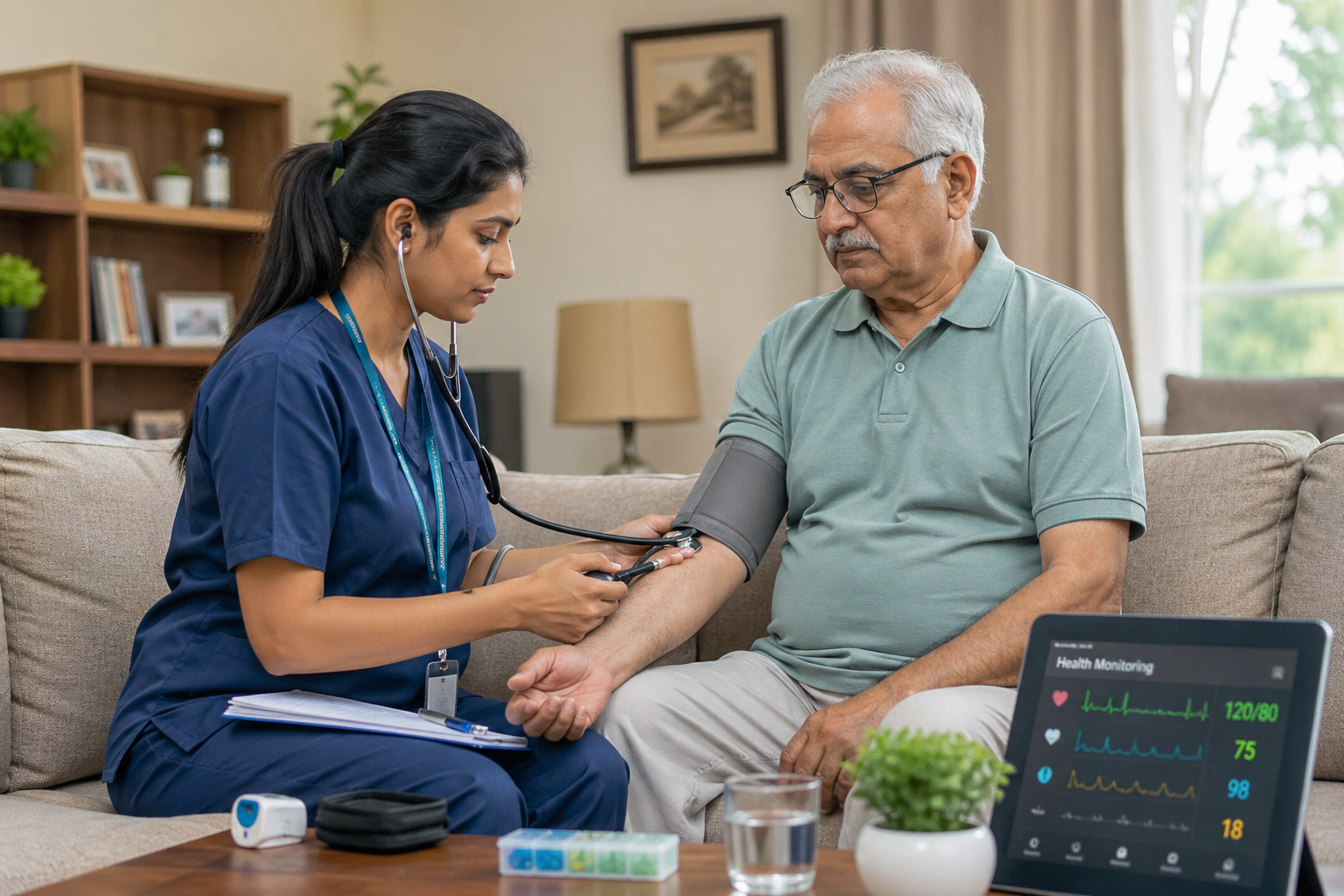
Many seniors require regular monitoring for chronic health conditions such as diabetes, heart disease, high blood pressure, or respiratory issues. Home monitoring allows early detection of health changes and prevents conditions from worsening into medical emergencies. Common monitoring practices include:
  • Blood pressure checks – daily or weekly measurements to track cardiovascular health and medication effectiveness
  • Blood sugar monitoring – regular glucose testing for diabetic seniors to prevent complications
  • Weight tracking – monitoring weight changes that indicate fluid retention or nutritional issues
  • Symptom tracking – documenting pain levels, breathing difficulties, or other concerning symptoms
  • Regular doctor consultations – scheduled checkups to review health status and adjust treatments
  • Vital sign monitoring – tracking temperature, pulse, and oxygen levels when needed
Caregivers play essential roles in conducting these monitoring activities, documenting results, recognizing concerning trends, and communicating health information to families and healthcare providers.

Role of Caregivers in Maintaining Senior Safety

Caregivers play a key role in ensuring daily safety and health monitoring for seniors by providing supervision, assistance with mobility, medication management, and observation of health changes. Their presence significantly reduces injury risks and ensures seniors receive immediate help when needed. Caregiver responsibilities include:
  • Observing changes in health – noticing symptoms such as confusion, weakness, breathing difficulties, or behavioral changes
  • Assisting with mobility – helping seniors walk safely, transfer from bed to chair, and navigate stairs
  • Monitoring medications – ensuring seniors take correct doses at proper times
  • Supporting daily activities – helping with bathing, dressing, meal preparation, and household tasks
  • Maintaining home safety – identifying and addressing hazards such as spills, clutter, or lighting issues
  • Responding to emergencies – acting quickly during falls, medical incidents, or urgent health situations
Learning how to choose a trusted caregiver for elderly parents at home helps families select qualified caregivers who provide reliable safety monitoring and health support.

Emergency Preparedness for Seniors at Home

Preparing for emergencies ensures a quick response during health incidents, falls, or medical crises. Proper planning reduces response time, improves outcomes, and gives seniors and families confidence in handling unexpected situations. Emergency preparedness steps include:
  • Keeping emergency contact numbers accessible – posting phone numbers for family, doctors, ambulance services, and neighbors
  • Having medical records organized – maintaining current medication lists, health conditions, allergies, and doctor information
  • Installing emergency alert systems – wearable devices or home systems that call for help during falls or emergencies
  • Ensuring caregivers know emergency procedures – training caregivers to recognize emergencies and respond appropriately
  • Creating evacuation plans – preparing for situations requiring quick home evacuation
  • Stocking emergency supplies – keeping first aid kits, medications, flashlights, and essential items ready
Regular emergency drills and updates to contact information ensure everyone involved in senior care knows how to respond during crises.

How NRI Families Can Monitor Parents’ Safety Remotely

Remote monitoring tools and reliable caregivers help NRI families stay connected to their parents’ health and safety despite geographic distance. Technology and professional support bridge the gap between families abroad and aging parents in India. Remote monitoring solutions include:
  • Regular caregiver updates – scheduled daily or weekly reports about parent health, activities, and concerns
  • Video calls with parents – frequent virtual visits allow families to observe parent wellbeing visually
  • Digital health monitoring devices – wearable trackers or home systems that measure vital signs and send data to families
  • Communication with local relatives – coordinating with nearby family members who can visit and check on parents
  • Emergency alert systems – devices that notify families immediately during falls or medical emergencies
  • Home cameras – providing visual oversight of common areas while respecting privacy
Understanding what challenges NRI families face caring for parents in India helps families abroad implement effective remote monitoring strategies and professional support systems.

Recognizing When Professional Support Is Needed

Professional support may become necessary when seniors require continuous supervision, specialized medical monitoring, or assistance that family members cannot provide consistently. Recognizing these signs early ensures seniors receive appropriate care before situations become critical. Signs that professional support is needed:
  • Frequent falls – multiple falls indicate mobility issues requiring constant supervision
  • Worsening chronic conditions – health declining despite current care arrangements
  • Difficulty managing daily activities – seniors struggling with bathing, dressing, cooking, or household tasks
  • Memory loss or confusion – cognitive decline affecting safety and medication management
  • Caregiver burnout – family members feeling overwhelmed, exhausted, or unable to continue caregiving
  • Medical complexity – multiple conditions requiring specialized monitoring and coordination

Benefits of Professional Home Care Services for Safety Monitoring

Professional elder care services provide structured health monitoring, trained caregiving support, and comprehensive safety oversight that help seniors remain safe at home. These services address complex care needs while giving families confidence in care quality. Benefits include:
  • Trained caregivers – professionals experienced in senior safety, health monitoring, and emergency response
  • Regular health monitoring – consistent tracking of vital signs, symptoms, and chronic condition management
  • Medication management – ensuring proper medication adherence and monitoring for side effects
  • Improved safety for seniors – professional caregivers maintain safe environments and prevent accidents
  • Family communication – regular updates keep families informed about parent health and wellbeing
  • Emergency response coordination – quick action during medical incidents or accidents
Learning about why families choose home elder care in India: costs and benefits helps families understand how professional services provide value through comprehensive safety monitoring and health support.

Conclusion

Ensuring senior safety and health monitoring at home requires comprehensive strategies, including home modifications, caregiver support, medication management, chronic condition monitoring, and emergency preparedness. These measures protect seniors from falls, health complications, and medical emergencies while allowing them to maintain independence and dignity in familiar home environments. Caregivers play critical roles in daily safety monitoring by assisting with mobility, observing health changes, managing medications, and responding quickly during emergencies. Professional elder care services provide trained caregivers, structured health monitoring systems, and reliable communication that give families confidence in care quality and senior wellbeing. For families caring for aging parents, particularly NRI families managing care remotely, implementing effective senior safety and health monitoring at home strategies ensures parents receive consistent, compassionate support. Proper planning, reliable caregiving, regular health tracking, and emergency preparedness create safe home environments where seniors can age comfortably while receiving the attentive care they need and deserve. Investing in comprehensive safety measures and professional caregiving support protects senior health, prevents injuries, and provides families peace of mind knowing their loved ones receive quality care at home.

Frequently Asked Questions

How can families ensure safety for seniors at home?

Families can ensure safety by making home modifications such as installing grab bars, improving lighting, removing tripping hazards, and using non-slip flooring. Hiring trained caregivers who monitor daily activities, assist with mobility, manage medications, and respond to emergencies significantly improves senior safety and reduces injury risks at home.

What are common safety risks for elderly people at home?

Common safety risks include slippery floors, poor lighting, bathroom hazards, stairs without handrails, cluttered walkways, loose rugs, and difficulty reaching high cabinets. These hazards increase fall risks and injuries. Addressing these issues through home modifications and caregiver supervision creates safer living environments for seniors.

How do caregivers monitor elderly health?

Caregivers monitor elderly health by checking vital signs such as blood pressure and blood sugar, tracking medication schedules, observing symptoms and behavioral changes, assisting with mobility, and documenting health information. They communicate regularly with families and doctors about health concerns, ensuring seniors receive timely medical attention when needed.

What home modifications improve senior safety?

Home modifications that improve senior safety include installing grab bars in bathrooms, adding handrails on stairs, improving lighting throughout the home, removing loose rugs, using non-slip flooring, arranging furniture for clear pathways, lowering shelf heights, and installing raised toilet seats. These changes reduce fall risks and improve accessibility.

How can NRI families monitor elderly parents remotely?

NRI families can monitor elderly parents remotely through regular caregiver updates, scheduled video calls, digital health monitoring devices, communication with local relatives, and emergency alert systems. Professional elder care services provide structured monitoring and regular reports that keep families informed about parent safety and health despite geographic distance.
Popular Tags :

Leave A Comment

Need Any Helps ?

Get More Consultations